How to explain what you want from a digital reference
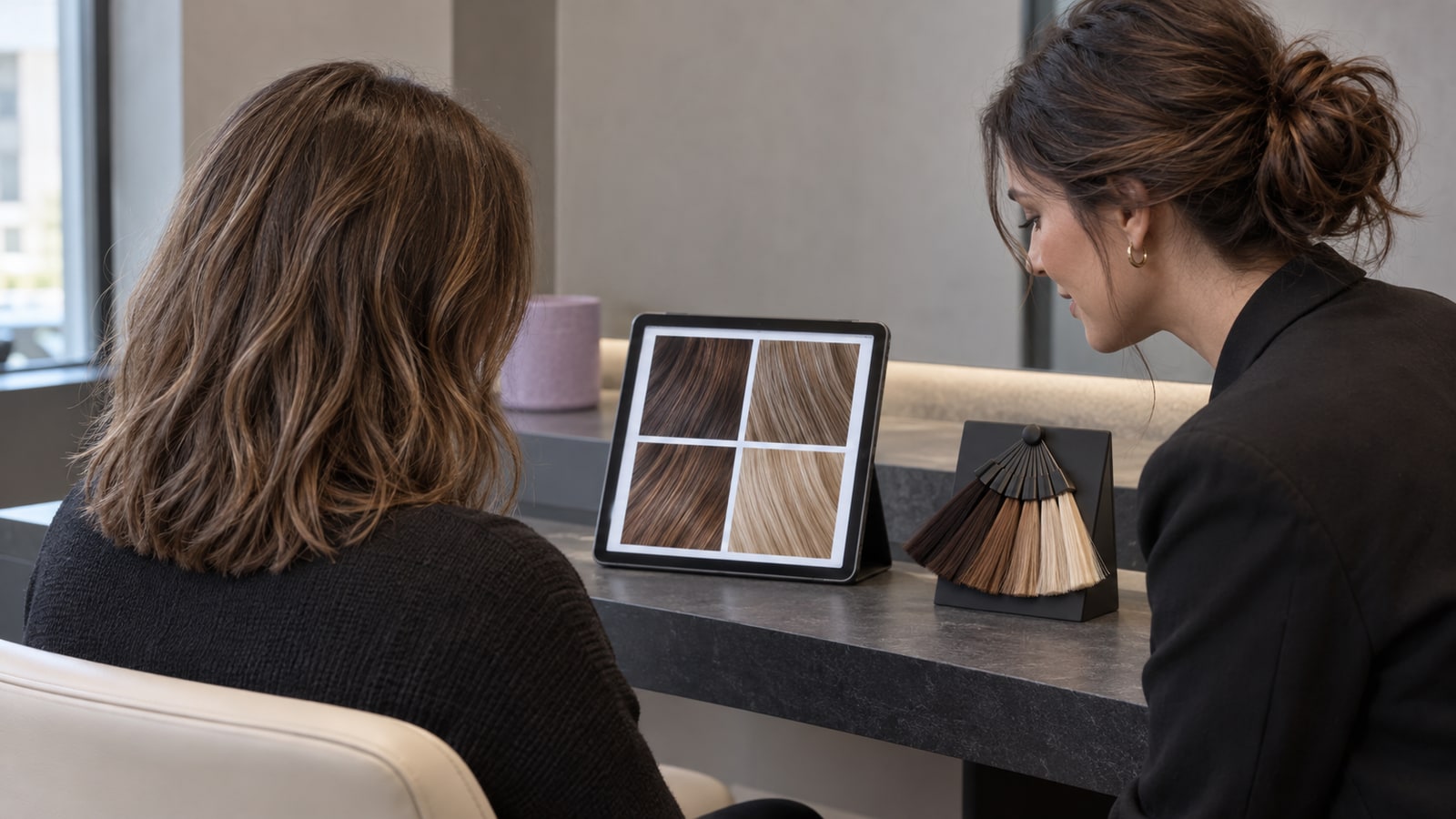
A virtual try-on screenshot is useful when it communicates a direction: “I like this medium depth,” “I want a neutral-cool finish,” or “I prefer softness at the root.” It gives you and the colorist something visible to discuss before technical decisions begin.
It becomes less useful when it is presented as an exact formula or a guaranteed finish. The app may preserve none of your real base, color history, porosity, gray pattern, or underlying pigment. Screen processing can also flatten roots and highlights into one color that would look artificial on physical hair.
Bring two or three references rather than one. Include the try-on you prefer, a nearby alternative, and—if helpful—a real salon photograph that shows the dimension or placement you mean. For each image, label the feature you want to discuss: depth, temperature, face-framing brightness, root softness, or overall contrast. If level is still unclear, use the hair-depth comparison guide before the appointment.
Disclose the full color history. Tell the colorist about permanent color, box dye, bleach, henna, glosses, smoothing services, and recent chemical treatments. A photo cannot reveal that history, and leaving it out can change the feasibility and safety of the plan.
The 4 questions to ask in the chair
1. What is a realistic lift in one session?
Ask the colorist to identify your current level and the target depth in the reference. Professional level systems describe lightness or darkness; tone codes describe the color direction within that level. Wella’s professional numbering guide is one example, but brands do not all use identical labels.
The important question is not only “What number is this?” Ask how much lift your current base and history can support in one appointment, what warmer underlying pigment may appear, and whether a staged plan would protect the condition and consistency of the hair better than a single-session goal.
2. What maintenance schedule does this direction require?
Ask how the root will look as it grows, which services maintain the placement, and what the color is expected to look like between visits. A high-contrast solid root and a softly blended root can begin at a similar depth while creating very different grow-out patterns.
3. What will toner upkeep involve?
Toner adjusts the visible reflect after lightening; it does not create the lift itself. Ask what tone is being targeted, how fading may change it, and which at-home products the colorist actually recommends. Follow the product directions instead of improvising a second formula at home.
4. What is the total investment?
Request the full plan rather than only the first service price. Include the number and type of appointments, maintenance visits, recommended products, approximate time in the chair, and the likely cost if the goal must be reached in stages. This lets you choose a nearby direction when the ideal screenshot demands more upkeep than you want.
| Brief item | What to record |
|---|---|
| Preferred direction | Target depth, warm/cool/neutral direction, placement, and root effect |
| Nearby alternative | A slightly deeper, softer, or lower-maintenance version you would accept |
| Known history | Previous color and chemical services, dates if known, and current at-home products |
| Decision limits | Your maintenance tolerance, available appointment time, budget range, and non-negotiables |
Ask what a strand test needs to check
A strand test applies the proposed process to a small, discreet section of your actual hair. It can show how that section lifts, which underlying warmth appears, how previously colored lengths respond, and whether the planned timing or formula needs adjustment. A screenshot cannot supply any of that evidence.
The test is especially important when the service involves substantial lightening, an uncertain color history, overlapping bands of old color, or a major correction. It does not guarantee that every strand on the head will respond identically, but it gives the colorist direct information before committing to the full service.
A strand test is not the same as the allergy alert or skin test required by a product’s instructions. Follow the manufacturer’s directions and the salon’s safety process separately. The FDA’s hair-dye safety guidance advises following package warnings and performing the directed skin test every time; it also notes that a negative skin test cannot guarantee that a reaction will not occur.
Frequently asked questions
Can my stylist duplicate the exact color from a try-on app?
Not reliably. The preview is rendered from pixels and screen color, while a salon result depends on your starting level, previous color, underlying pigment, porosity, technique, light, and fading. Ask the stylist to match the direction—depth, tone, dimension, and placement—then explain what your hair can realistically reproduce.
What if the stylist tells me the color isn’t achievable on my hair?
Ask which constraint is decisive and what nearby result is achievable: less lift, a deeper level, a warmer finish, a staged plan, or different placement. You can also request a second professional consultation if the explanation remains unclear. Do not treat another app preview as evidence that the chemical process is possible.