Level describes depth; tone describes reflect
A hair-color level answers one question: how dark or light is the reference? Tone answers another: what color does it reflect? A level-7 ash reference and a level-7 gold reference can sit at a similar depth while showing different cool and warm reflections. The number names a target within a shade system; it does not tell you what will happen when color meets your hair.
For example, you might prefer the depth of a medium-blonde swatch but want its golden reflect replaced by a cooler one. Tell your colorist which part you mean. The starting pigment, previous color, and process still matter. If you want a simple way to record both your desired shade and your history, use the hair color salon brief. A physical swatch and an in-person assessment can turn a vague shade name into a more useful discussion.
Read a 1–10 depth chart
Many professional charts use increasing numbers to move from dark hair toward lighter blonde hair, but their names and ranges are not identical. The table below is an orientation guide, not a measurement of your natural base or a code key for every brand. For instance, the Wella Professionals Color Renew guide shows its own scale from 2 through 10 and a separate curve of underlying pigment. Use the chart supplied with the actual color line when a number matters.
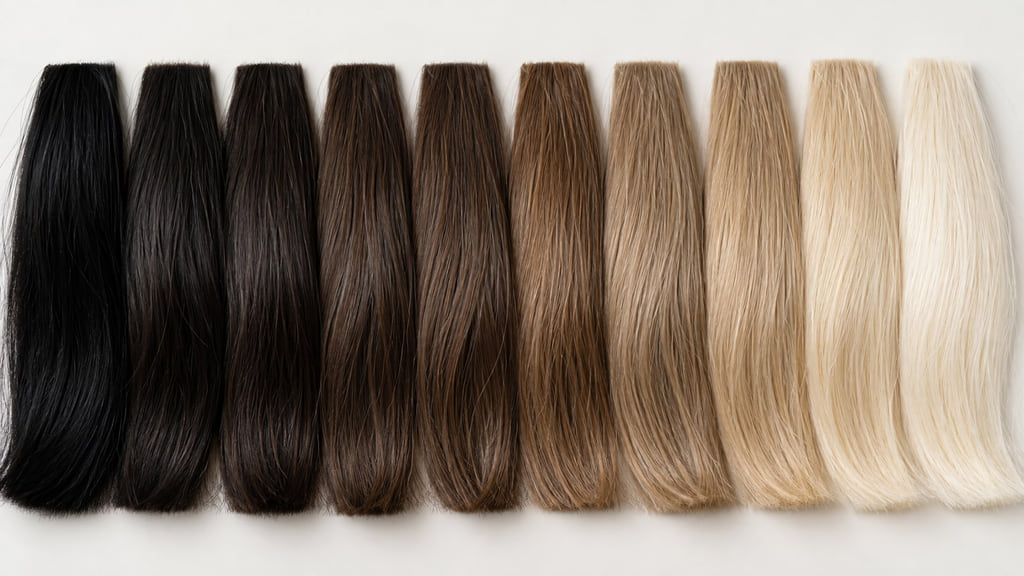
Read down the depth column first. The ten swatches above show a visual progression, but they are illustrative images on a screen: lighting, display settings, and the color line can all change how a swatch appears. Neither the image nor a selfie can establish the exact level at your roots or reveal old dye through your lengths. Ask a colorist to compare your hair with physical swatches in consistent light.
| Level | Broad depth description | What to compare |
|---|---|---|
| 1 | Black | Near-black depth |
| 2 | Darkest brown | Black-brown versus visible brown |
| 3 | Dark brown | Brown visible in neutral light |
| 4 | Medium-dark brown | Depth before choosing a warm or cool reflect |
| 5 | Light brown | Brown-to-blonde boundary in the named line |
| 6 | Dark blonde | A deeper blonde or lighter brunette reference |
| 7 | Medium blonde | Similar depth with different reflects |
| 8 | Light blonde | Lightness apart from ash, gold, or other tone |
| 9 | Very light blonde | A pale reference under consistent light |
| 10 | Lightest blonde | Lightest depth on this illustrative scale |
A pale swatch and a platinum finish are different ideas: “pale” describes depth, while “platinum” also implies a cool reflect. If you are still deciding which broad direction you want, start with the what hair color suits me guide, then return to a specific brand chart for numbers.
Decode a brand-specific tone number
Look for the brand and product line before interpreting the digits. In Wella Professionals’ Color Renew technical guide, the shade-number example is 6/97: 6 is the depth level, 9 is the primary tone, and 7 is the secondary tone. The guide calls /9 “Cendré (soft violet)” and /7 “Brown (warm).” The slash separates the level from the tone digits in that system. This is a way to read a reference, not a formula for mixing color or a promise about the final appearance.
The same Wella guide names /1 “Gray Ash” and /3 “Gold,” which makes a useful comparison: keep the approximate depth steady and compare how a cooler or warmer reflect changes the reference. Another brand may assign different meanings to the same suffix. Even within Wella, consult the chart for the exact line you plan to use. A product code cannot describe your starting pigment, previous color, or how the hair will respond.
Once you have chosen a tone direction, consider how often you would want to refresh it. The hair color maintenance guide covers grow-out and fading; a colorist can advise on upkeep for your starting point and the product used.
Why a reference shade is not a result guarantee
Lightening can expose underlying pigment, and previous dye can change the starting canvas. Wella’s guide illustrates an underlying-pigment curve for its color discussion, but that diagram does not measure your hair through a photograph. A virtual try-on can help you compare an ash direction with a gold one at a similar apparent depth; it cannot predict lift, processing, porosity, or the finished salon shade. A colorist needs to examine your hair and may recommend a strand test before a substantial change. If you are deciding which service to discuss, read our demi-permanent vs. permanent hair color comparison.
Product safety is a separate step from checking a color result. The FDA’s hair-dye guidance says to follow package directions and warnings and to do a patch test before dyeing. A patch test checks for a possible skin reaction; a strand test helps assess what a color process may do to a small section of hair. Follow the manufacturer’s instructions and ask a qualified professional how to plan either test for the products and service involved.
Bring a useful reference: Write down the brand and line, the shade code, what you like about its depth and reflect, your current color, and any past coloring. Ask which parts of the reference are realistic for your hair and what testing or stages would be needed.
Frequently asked questions
Are tone numbers interchangeable between brands?
No. Read each number with the legend for its named brand and product line. In the Wella example above, /9 and /7 have specific meanings; a similar-looking code elsewhere may mean something else. Compare swatches and the actual chart rather than treating a suffix as a universal shade name.
Does level 6 with an ash tone guarantee my final color?
No. It describes a reference, while the result depends on starting pigment, previous color, the chosen process, and how your hair responds. The same caution applies to a large change such as a level-3-to-level-9 reference: a single visit cannot be promised from a chart or a photo. Bring your color history to a consultation and ask whether a strand test or a staged plan is appropriate.