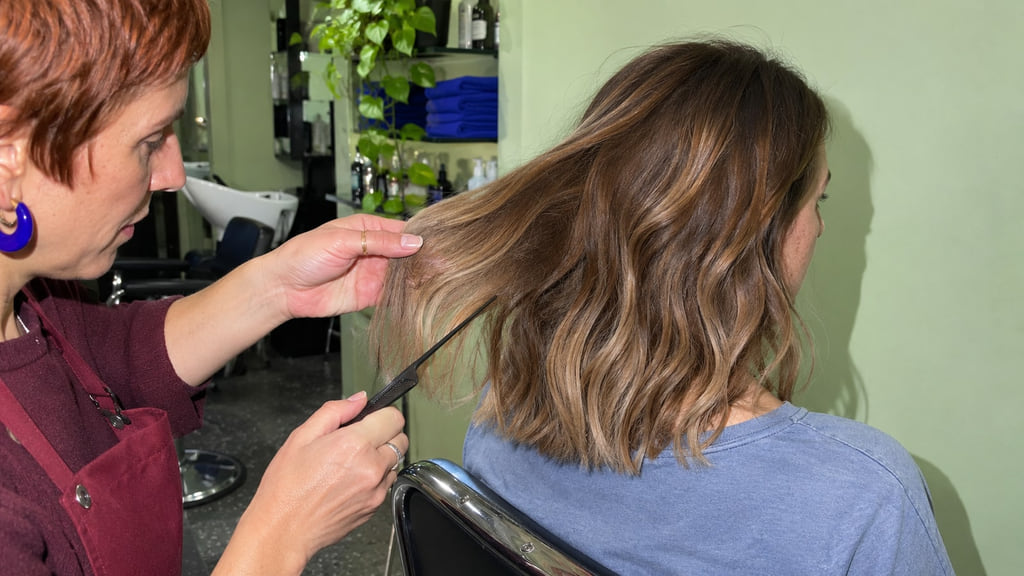
Compare the look before the technique name
Balayage usually names a way of placing lightener: the colorist paints selected sections to create a chosen pattern of brightness. Highlights describe lighter pieces in the hair; foils are one way to make them. That is why “balayage versus highlights” is not a strict either-or choice. Tell your colorist where you want lightness before asking which technique fits it.
The methods can overlap. Wella describes foilyage as balayage developed in foils, an example of painted placement and foil processing in one service. That does not mean every painted section is developed in open air or that every foil highlight forms a regular stripe. The placement, starting hair, and chosen tone all affect the appearance. Once you have settled on a placement goal, our hair color maintenance guide covers the separate question of caring for the color.
Choose root brightness and placement
Look first at the part and hairline. Do you want lighter pieces to start close to the root, or do you prefer more of your current depth near the scalp? Then look through the mid-lengths and ends: should brightness appear in a few broad, soft areas or in finer pieces distributed more evenly? These are requests a colorist can translate into a technique, rather than fixed outcomes promised by technique names.
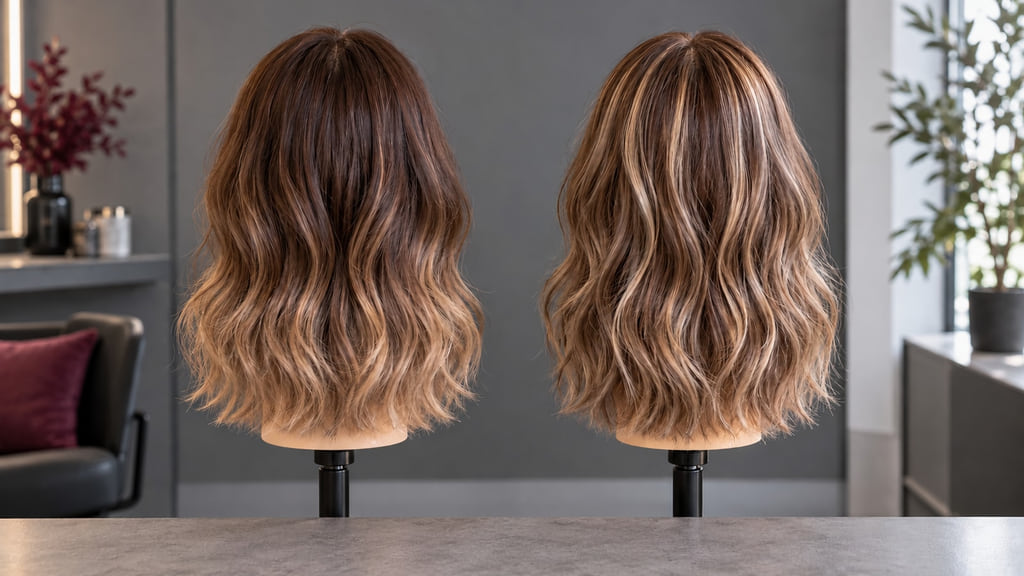
These separate mannequin sections use a similar brown base and wave pattern to make the location of lighter strands easier to compare. The left keeps more depth at the roots; the right carries finer light pieces nearer the top. A colorist could combine features from both references. Neither is a before-and-after or a prediction for your hair. Your base, previous color, and the amount of lift needed may change what is feasible.
| Area | If you want a softer transition | If you want more brightness from the top |
|---|---|---|
| Roots | Keep more of the current depth near the part and hairline. | Discuss lighter pieces starting closer to the scalp. |
| Mid-lengths | Place lightness in selected, less regular areas. | Discuss finer or more evenly distributed pieces. |
| Ends | Ask whether the ends should carry the most visible brightness. | Decide whether the ends should stay similar to the lengths or look brighter. |
| Pattern | Show a reference for a diffuse, varied transition. | Show a reference for a more continuous pattern from the top. |
Neither column is reserved for one technique. For example, a colorist might paint some sections and wrap them in foils to pursue a particular level of brightness. Ask how the proposed placement will look when your hair is parted and styled as you usually wear it. If your cut changes where the bright pieces fall, see haircut styles for hair color dimension for that narrower question.
Compare full and partial options
Full and partial describe the amount or location of hair treated, not a tone and not an automatic choice between balayage and foils. Wella describes partial balayage as placement in selected sections, while its full balayage example covers more of the hair. Salons may define their service areas differently, so ask exactly which sections are included.
A partial service may suit a request for lightness around the face or on the top layer, while a fuller placement may matter if you also want brightness through the back and underneath. These are examples of goals, not a universal service menu. A smaller treated area does not guarantee no damage, a particular price, or the same color on every starting base. Ask your colorist what the planned lightening involves for your hair and whether a strand test would help assess a proposed change.
Try this wording: “I want the brightness to start here at my part, remain softer here at the back, and reach this level at the ends. Which sections would you treat in a partial versus full appointment?”
Save a front, side, and back reference if each view matters to you. In your hair color salon brief, record where you want the light pieces and where you want to keep depth. A single face-framing photo cannot show a colorist what you expect underneath or at the back.
Ask about tone upkeep and regrowth
As hair grows, the placement of lighter pieces moves away from the scalp. Separately, the color tone can change as the hair is washed and exposed to daily conditions. Refreshing tone and adding new light pieces are therefore different questions, even if a salon discusses them in the same visit. A soft-looking root transition may make growth less visually abrupt for some plans, but no technique name guarantees a maintenance interval.
Ask three practical questions: “What will my part and hairline look like as this grows?” “Would the tone need attention before the placement needs renewing?” “What parts of this plan depend on my existing color history?” Show the answer you prefer with two references in consistent light. A virtual try-on can help compare color directions, but it cannot identify past dye, predict lift, or show the future root line from a particular service. A strand test and a colorist’s assessment are more useful for checking feasibility.
If you like a bright piece right at the hairline, say so and ask how visible new growth might appear there. If you prefer more of your current depth near the roots, ask how that depth will connect to the lighter lengths. Bring both the placement and upkeep questions to your consultation; they are more actionable than requesting “low-maintenance balayage” without a reference.
Frequently asked questions
Can balayage use foils?
Yes. Wella’s foilyage example combines balayage placement with development in foils. Ask your colorist why foils would be used for your proposed placement and starting hair rather than assuming one technique always excludes the other.
Is partial balayage a different tone?
No. Partial refers to selected areas being treated. Tone is the color reflect you want in those areas. Discuss the treated sections, desired tone, and realistic upkeep separately; a partial appointment does not guarantee a damage-free result.