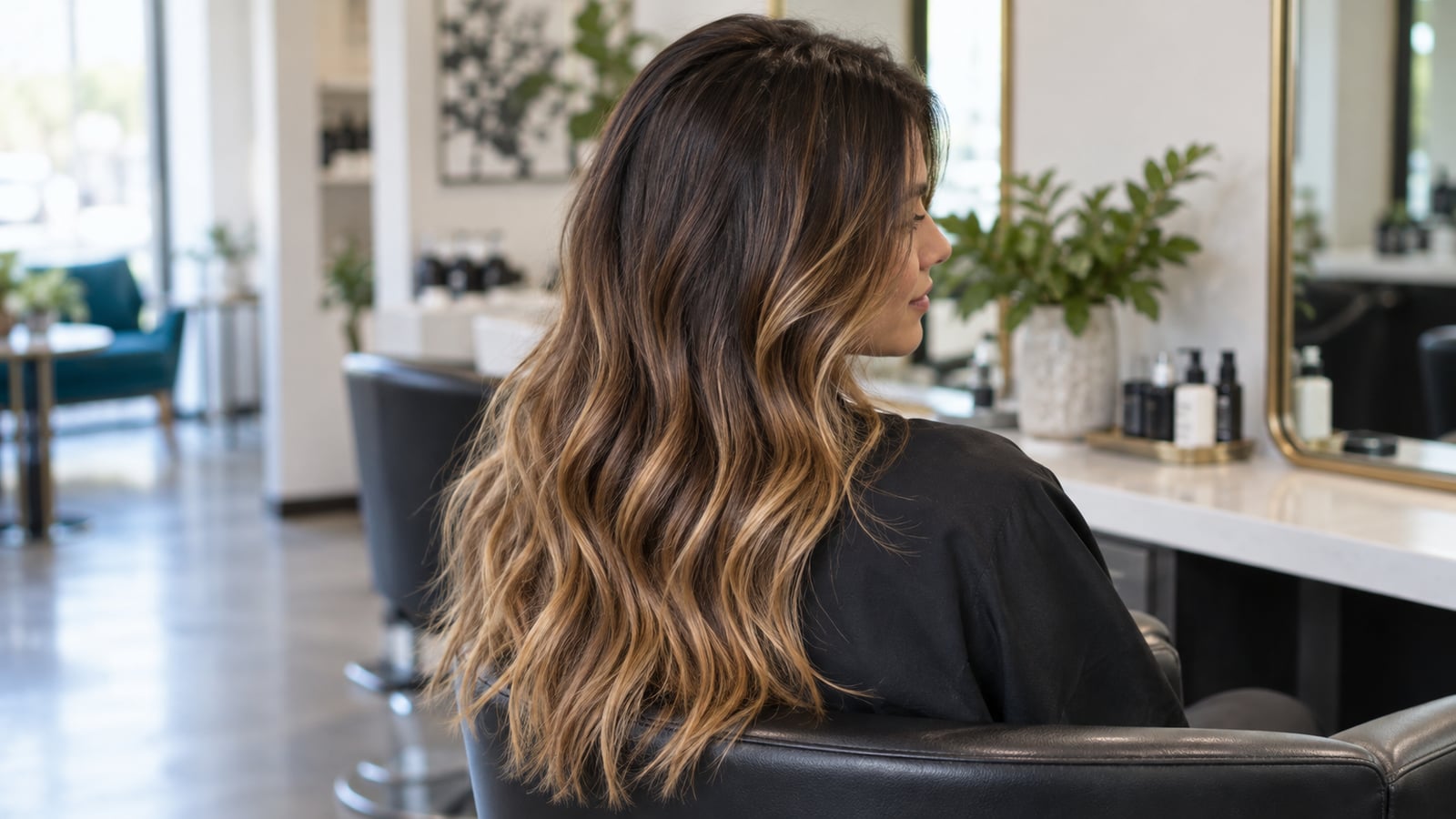
The demarcation math: lift levels and maintenance schedules
A four-level lift does more than create a brighter result. It increases the visible distance between the natural root and the colored hair. As the root grows, that contrast forms a clearer line of demarcation. A one- or two-level shift can still look intentional after more growth, especially when the root is left natural or softly blended.
| Change from natural base | Typical visual effect at the root | Common maintenance planning window | Questions to ask |
|---|---|---|---|
| Stay at base / tonal shift | Lowest depth contrast; fading may matter more than a root line. | Gloss or tone refresh as needed; root work may be minimal. | Will the tone fade warm or cool? Can my natural root remain untouched? |
| 1–2 levels of lift | Softer transition, especially with balayage or fine highlights. | Often planned around 12–16 weeks. | Can brightness be concentrated away from the scalp? How will it look at week twelve? |
| 3 levels of lift | More visible contrast; placement determines how quickly the root reads. | Often 8–12 weeks, with variation by technique and preference. | Would a root shadow or fewer foils at the part soften the line? |
| 4+ levels of lift | Strong contrast and a clearer demarcation line near the scalp. | Often planned around 4–6 weeks for a consistently bright root. | Is this lift realistic for my history? Could a rooted version meet my goal? |
These are conversation ranges, not appointment guarantees. Growth rate, gray coverage, placement, fading, hair condition, budget, and how much root you enjoy seeing can move the schedule substantially. Decide what “maintained” means to you before choosing the technique.
Low-maintenance shade families for natural bases 4 through 7
Base levels describe depth: lower numbers are darker and higher numbers are lighter, although exact numbering varies by brand. A colorist should confirm your natural level in person. Use the ranges below as shortlist language, not a home formula.
Level 4–5: rich mocha and dimensional brunette
A rich mocha or neutral deep brunette can preserve the visual weight of a level 4–5 base while adding reflect and movement. For lighter dimension, keep ribbons narrow and off the scalp, or ask for a deeper root with restrained chestnut or beige-brown lengths. Very pale face-framing pieces create a stronger maintenance commitment than subtle brown-on-brown variation.
Level 5–6: mushroom brown and muted bronde
Mushroom brown combines taupe, beige, and muted ash-brown direction. It can sit close enough to a level 5–6 base to avoid a high-contrast root, but too much ash can read flat as it fades. A neutral-cool gloss or finely spaced bronde pieces can keep depth while introducing a softer change.
Level 6–7: subtle cool bronde and dark beige blonde
On a level 6–7 base, a dark beige blonde or cool-neutral bronde may provide brightness without pushing to a very pale result. Keeping some natural depth at the part and between lighter sections gives new growth somewhere to blend. If your lengths are previously colored, the process may differ from what the natural roots can achieve.
Modern blending techniques: root smudging, reverse balayage, and glossing
Root smudging
A root smudge applies a transitional tone near the scalp after or between lightened sections. The goal is to blur the line, not necessarily make the root dramatically darker. Ask where the smudge will end, how permanent it is, and whether it will complicate future lightening.
Reverse balayage
Reverse balayage adds selected darker pieces back through overly light lengths. It can reconnect the mid-lengths with the natural root and reduce the striped or solid-blonde effect. The placement should preserve the lightness you still want rather than simply covering it.
Glossing
A gloss refines tone and adds temporary tonal depth or shine without recreating the original lightening service. It can keep beige, mocha, or cool-neutral direction coherent as the hair fades. It cannot erase a major root-depth difference, so pair it with placement that already suits your grow-out plan.
Salon brief: “I want to keep my natural root visible, stay within about two levels of my base, and concentrate brightness through the mid-lengths. Please show me where the grow-out line will sit and what the color is likely to look like before the next appointment.”
Before a permanent change, discuss color history and whether a strand test is needed. Follow product directions and safety warnings; the FDA recommends the directed skin test before every hair-dye use.
Frequently asked questions
What hair color requires the least touch-up?
A tonal change close to your natural depth usually creates the least obvious root line. Brown-on-brown dimension, a gloss near the natural base, and balayage that begins away from the scalp are common directions. Gray coverage can change the schedule because it often requires root work even when the depth is close.
How does root shadowing extend time between salon visits?
A root shadow creates a transition between the natural root and lighter lengths, so growth appears as a gradient rather than an abrupt band. It does not stop growth or fading, and the formula still needs to be planned around future services.