
Compare two dark shades in consistent light
The useful difference between dark brown and black is how much brown you can still see when light reaches the hair. Dark brown may look nearly black indoors, then reveal brown along the surface and ends in daylight. Black can hold a deeper overall outline, while its visible reflect may still be neutral, cool, or subtly warm. If you compare one bright studio shot with one dim selfie, exposure can hide that distinction.
Look at both references under similar, neutral light, with the camera's white balance kept consistent. Nikon explains that white balance changes how a camera renders the color temperature of a scene. A photo is therefore a comparison aid, not a way to measure your natural hair level. If a swatch card gives a level, read it within that brand's system. L’Oréal describes level as how light or dark hair is, but its shade names and numbers belong to its product chart. “Espresso” and “darkest brown” are useful descriptions, not universal codes.
Quick comparison: Put your dark brown and black references side by side in the same daylight. Look at the part, the outer edge, and the ends. Can you still see a brown reflect, or do you prefer a more continuous black outline?
If you are also exploring a seasonal palette, the hair colors for Deep Winter guide compares dark options within that style framework. This page focuses on the shade decision itself, whatever palette label you use.
Separate depth from warm or cool reflect
Depth is how dark a shade appears; reflect is the color you notice where light catches it. That distinction matters at the dark end of a shade chart. A warm dark brown can show a restrained reddish or golden-brown sheen. A cooler brown may show less visible warmth at the same apparent depth. Neutral soft black can read black without a blue cast, while a cool black can reveal a subtle cooler sheen. None of those labels guarantees the same result across brands or starting hair.
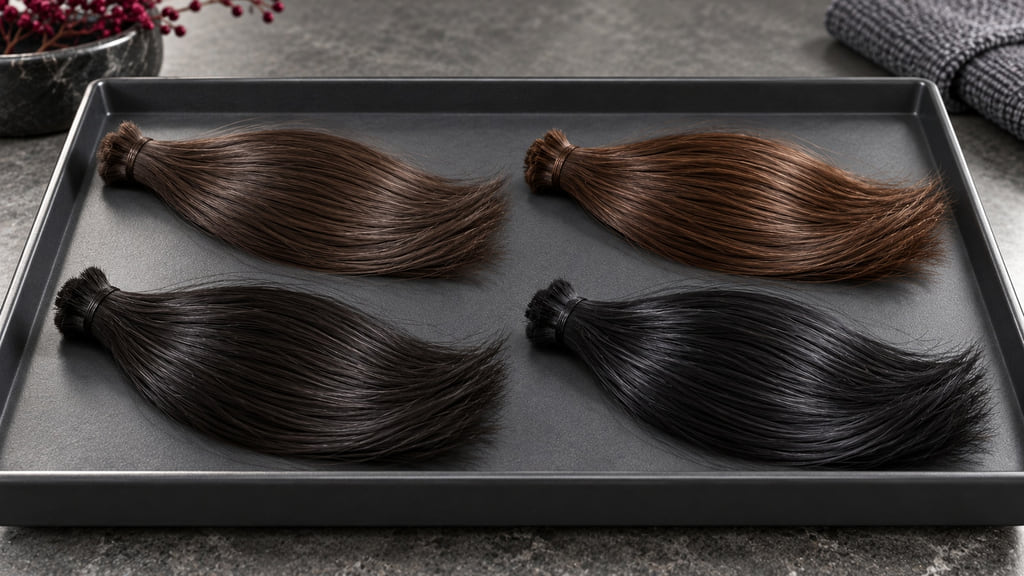
In this illustrative set, the top row remains visibly brown where the fibers catch the light. The lower row reads deeper, with different neutral and cool reflections. The image helps you name a direction; it is not a shade match or a before-and-after. On a real color chart, read the brand's tone legend alongside its depth scale. For example, a Wella technical guide uses its own codes for ash, gold, and warm brown tones. Do not transfer those suffixes to another product line.
| Direction | What to look for in consistent light | Useful salon wording |
|---|---|---|
| Neutral dark brown | Brown detail remains visible on the surface and at the ends. | “I want depth, with brown still visible in daylight.” |
| Warm dark brown | A brown outline with a restrained warm reflection. | “Keep it dark, but show me a warmer brown swatch.” |
| Neutral soft black | A black outline without an obvious blue reflection. | “Show me soft black beside your darkest brown.” |
| Cool black | A black outline with a subtle cool reflection in light. | “I want to compare cool black with neutral black.” |
If cool shades are part of your comparison, see hair colors for Cool Winter for that separate palette question. A palette name does not determine which dark dye is right for your hair.
Consider contrast and your existing color
Decide how strong an outline you want around your face and clothing. Black may create a more graphic edge than dark brown; a brown reflection may make more strand movement visible in light. Neither effect is required by your skin depth or a season label. Compare the two at similar brightness and with the same styling, then choose the contrast you actually like. A camera can change that apparent contrast, so check physical references when you can.
Your current color also changes the practical decision. A natural dark base, previously lightened ends, and lengths carrying old dye can respond differently to a new service. A photo cannot reveal the whole color history, porosity, or what shade a colorist can achieve. Bring the products and dates you remember, even if they are approximate, and point out any sections that have been colored before. Our hair color levels and tones guide explains the depth-versus-reflect vocabulary if you want to label your references more precisely.
For example, if your current hair reads dark brown in daylight, compare a neutral soft black swatch with a similarly styled dark brown one before asking for a very dark change. Notice the overall outline first, then inspect the reflection. That is a preference test, not a diagnosis of undertone or a prediction of the finished service.
Plan for maintenance and future changes
Going darker can feel like a small change when both references look dark on a screen, but future lightening is a separate decision. Ask what changing lighter later would involve for your particular color history. Do not assume that a lighter box color will simply reverse dark artificial pigment. A colorist can discuss the likely service path and whether a strand test would help assess how your hair responds.
Also ask how the chosen reflect may look between appointments and how visible your natural root might be as it grows. These questions depend on your starting base, product, and plan; a shade name alone does not set a universal refresh schedule. If you are comparing temporary-looking inspiration with a lasting color change, make that distinction explicit in the consultation. Virtual try-on can help you compare directions on a photo, but it cannot predict lift, color removal, or the exact salon result.
Take this to your colorist: “I prefer this depth and this reflect in neutral light. Here is my current color history. How would this look as it grows, and what would changing lighter later involve? Would a strand test help us decide?”
Save one daylight reference for dark brown and one for black, plus a note about which reflect you prefer. Use the hair color salon brief to organize those examples and questions before your appointment.
Frequently asked questions
Is all black hair blue-black?
No. Soft black may look neutral, while another named black shade can show a cooler reflect. Compare the actual swatches in consistent light rather than assuming that “black” means blue-black in every product line.
Can I easily return to a lighter shade afterward?
Do not count on an easy reversal. The answer depends on your existing color and the product used to go darker. Tell your colorist about previous dye and future lighter goals before the change; ask what a strand test can clarify.