
Decide how much silver you want to keep visible
Gray blending aims to soften the transition between silver strands and the surrounding color while leaving some silver visible. Fuller gray coverage aims for a more opaque appearance. The useful first question is how much silver you want to see, especially around your part, temples, and hairline. Neither choice is a requirement to hide gray hair.
These are visual goals rather than verdicts about your age or appearance. You might say, “I want a softer transition, and I still want to see some silver,” or “I prefer a fuller, more uniform-looking color at my roots.” Hair.com describes blending as a softer transition, but its examples cannot tell you how a particular formula will look on your hair. If you are comparing a specific cool palette, the hair colors for cool summer guide covers that narrower color choice.
Example: Two people could choose the same medium-brown direction and ask for different silver visibility. One might keep fine silver strands throughout the top; the other might want the roots to read as a more continuous brown. The shade name alone does not settle that decision, and a photo cannot reliably measure how much gray you have or what result is achievable.
Compare color, highlights, and lowlights
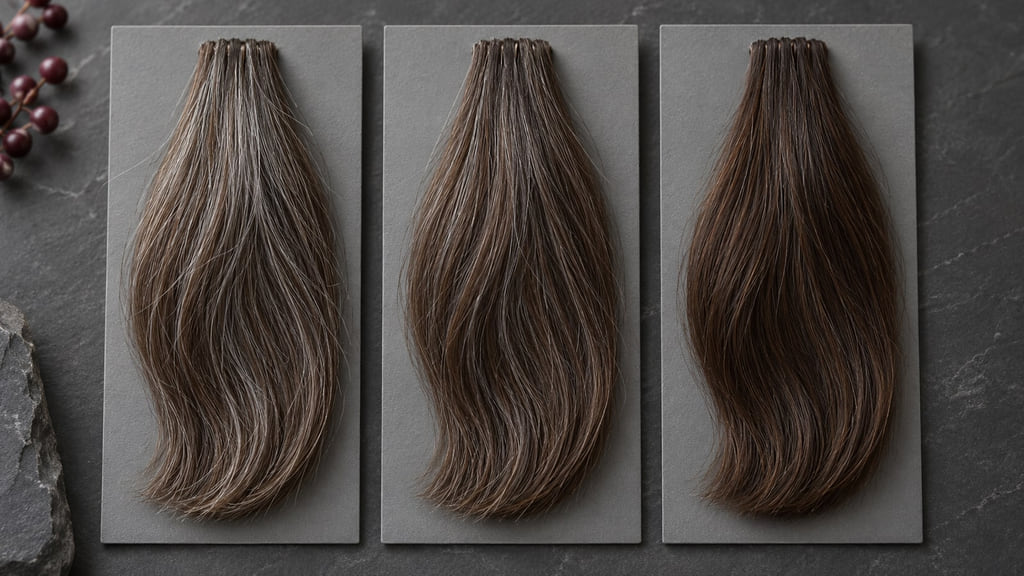
The three swatches show one illustrative starting mix and two different goals at a similar brown depth. The middle reference keeps silver visible with a softer contrast; the right reference shows less visible silver. They are separate samples, not stages of a treatment or proof of a result. Use them to point out the difference you prefer, then ask your colorist what could create it on your starting hair.
Blending is not another word for highlights. Highlights, lowlights, and all-over color can each play a part in different plans, depending on the starting color, placement, and desired opacity. A lighter piece next to silver may reduce contrast in one area; a darker lowlight may add depth elsewhere. An all-over formula can also be discussed when the aim is a translucent blend or a denser-looking finish. Technique names do not specify the final amount of visible gray.
| Question | If you want silver visible | If you want fuller coverage |
|---|---|---|
| At the roots | Where should individual silver strands still show? | Where do you want a more opaque-looking result? |
| Through the lengths | Would lighter or darker pieces help soften contrast without hiding all silver? | How should the lengths relate to the root color? |
| Product choice | What opacity does the named formula aim to produce on my hair? | What coverage can the named formula realistically provide? |
| As it grows | How will the visible mix change at the part and hairline? | How distinct might the new-growth boundary appear? |
Wella gives different opacity examples within its own demi-permanent range, including a more translucent blending option and a more coverage-focused one. That is a useful reminder to ask for the named product, not a reason to assume every demi-permanent formula behaves the same way. The broader hair color maintenance guide covers refreshes and fading after you have chosen a direction.
Compare the grow-out you are willing to maintain
Imagine the same starting mix of brown and silver with two different goals. A softer blend leaves some silver in the colored look, so new growth may feel less separate from the lengths. A more opaque brown result can create a clearer contrast where silver roots meet colored hair. Neither outcome has a fixed upkeep interval; the boundary you notice depends on placement, starting hair, shade difference, and the product used.
Look at your part, temples, and hairline separately. Ask which area you are willing to see change first as hair grows. If a sharp root boundary would bother you, say so before choosing a dense-looking goal. If you like a continuous color and accept more visible new growth, that preference is equally valid. Your colorist can explain the likely upkeep for your particular plan; the sample image cannot predict it.
Virtual try-on can help compare color directions in a consistent photo, but it cannot show the actual opacity or future root line from a specific service. A strand test and a colorist’s assessment are better checks for how a proposed color may behave on your hair. Bring the starting images and the grow-out concern into your hair color salon brief so they remain part of the decision.
Bring a gray-visibility brief to your consultation
Bring a reference that shows the amount of silver you like and another that shows an amount you would rather avoid. Point to your part, temples, and hairline, and describe where you want the color to look softer or more opaque. Tell your colorist about past dye, lightening, and root work, including any areas that were colored differently. Those details matter to the service plan and cannot be determined reliably from a picture.
A sentence you can use: “I want some silver to remain visible around my part, but I would like a softer transition at my temples. Here is the color depth I prefer. What technique and named product would you suggest for my starting hair, and what would the grow-out look like?”
If you prefer fuller coverage, change the first sentence to: “I would like a more opaque-looking result at my part and hairline.” Ask what opacity is realistic and how the roots may look as they grow. For any hair dye, follow the specific product’s warnings and testing instructions; the FDA advises following package directions and the recommended patch test. Your colorist can also discuss whether a strand test would help assess the intended color.
Frequently asked questions
Is gray blending always highlights?
No. Gray blending describes a softer visual transition while some silver remains visible. Highlights can be one tool, but placement, lowlights, and color formulas may also be considered. Ask which technique serves the amount of silver you want to keep.
Does gray blending require no maintenance?
No. The visible mix, tone, and root boundary can change as hair grows or color wears. Discuss the areas you notice most and the upkeep you are willing to do before agreeing on a plan.