
Keep depth constant when you compare tone
When you compare ash blonde with golden blonde, separate depth—how light or dark a shade looks—from tone, the cooler or warmer reflect you notice within it. A pale ash photo beside a darker golden photo changes both variables. You may prefer the lighter one because of its brightness rather than its coolness. Find references with a similar overall blonde depth before deciding which tone you like.
L’Oréal Paris names ash blonde and medium golden blonde among its product examples. Those names describe directions in that product range; they do not establish that one tone is better for a particular person or that the two products create matched depths. For a closer look at the distinction between level and tone, read our guide to hair color levels and tones.
Example: If one saved photo shows a cool, pale blonde and another shows a honey-colored dark blonde, search again for a warmer photo at the first photo’s apparent depth—or a cooler photo at the second’s. Keep the lighting similar as well. Warm indoor light can make the same reference look more golden, while a cool edit can flatten warmth. This exercise clarifies your preference; it does not predict a formula or finished salon color.
Compare ash, gold, and a neutral middle option
Use three references with comparable depth, length, texture, and exposure. Ash blonde has a restrained cool reflect and less visible gold. Golden blonde carries a soft, noticeable warm reflect. A neutral beige blonde can sit between those impressions without looking strongly cool or strongly golden. Neutral is a useful third reference if you are undecided, not a choice you must make when both ends of the comparison appeal to you.
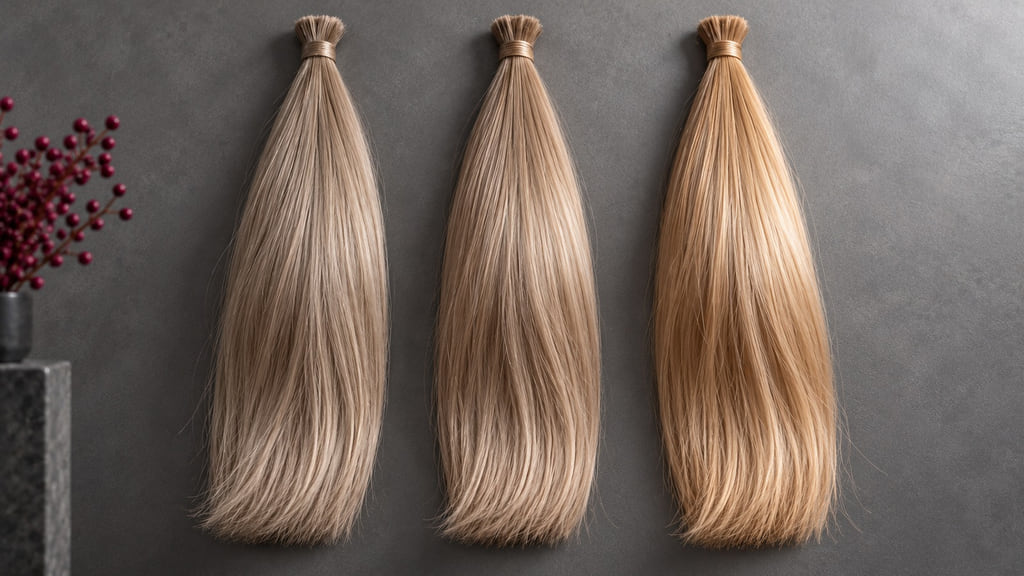
In these illustrative tresses, the left looks cooler, the center more balanced, and the right warmer. The similar apparent depth and neutral lighting help isolate tone. They are visual examples, not measured shade standards: real hair can show more than one reflect along its length, and a photograph can shift with exposure, white balance, and editing. Save the version whose visible reflect you actually want, then describe it in words.
| Direction | Visible reflect to look for | Useful question |
|---|---|---|
| Ash blonde | Cooler, muted beige or gray-beige reflect with little obvious gold. | Do I want the warmth to stay subdued in normal light? |
| Neutral blonde | Beige or softly balanced reflect without a strong cool or golden cast. | Would I prefer a quieter middle reference? |
| Golden blonde | Visible soft gold, without needing a deeper or more saturated yellow shade. | Do I enjoy this warmth across the whole length or only in selected pieces? |
If you use a seasonal palette as an inspiration tool, keep it separate from the color service decision. Our hair colors for Soft Summer guide addresses one muted palette; it cannot diagnose your season from a photograph or require ash blonde. Your preference for a cool or warm reflect remains a valid part of the choice.
Discuss your starting base and existing color
The same reference may require different work on natural dark hair, previously lightened hair, and hair with color already on the lengths. Lightening can expose warm underlying pigment; that warmth is part of the starting point, not automatically a mistake. A cool reference may involve a different plan from a golden one, and neither can be specified reliably from an inspiration photo alone. Tell your colorist what services you know you have had and where your roots and ends differ.
Wella’s technical guide illustrates the distinction between level, underlying pigment, and tone in its own numbering system: it calls /1 “Gray Ash” and /3 “Gold.” These are Wella examples, not universal dye codes and not numbers to transfer to a L’Oréal product. They explain why a tone name alone does not tell a colorist what your hair must undergo to reach a reference.
Example: Someone with blonde highlights may be choosing mainly which reflect to emphasize, while someone starting from a darker brown may need a separate conversation about lightening before either blonde reference is realistic. The photograph cannot identify their hair history, underlying pigment, or likely result. A colorist can assess the starting hair and explain whether a strand test would help. For a separate seasonal styling example, see hair colors for Warm Spring; it is a palette guide, not a service plan.
Choose upkeep you can sustain
Ask how the proposed tone may change between appointments and what upkeep would be appropriate for the specific color and products used. L’Oréal Paris describes hair toner as a treatment that refines tone after coloring, and its page also lists toning glosses. That explains one possible way to adjust reflect; it does not mean every ash blonde needs the same toner, every golden blonde needs no maintenance, or a product can create a lighter base by itself.
Instead of copying a purple-shampoo schedule from a different person's routine, ask: “Which reflect are we trying to keep, which change would tell us it is time to adjust it, and what does this plan require from me?” Include your tolerance for visible roots, salon visits, and at-home care. Our hair color maintenance guide helps you compare the broader upkeep trade-offs without prescribing one routine for every blonde.
Bring this to your consultation: “I have ash, neutral-beige, and golden blonde references at a similar depth. I prefer the reflect in this one and the brightness in that one. Can we compare them with my current roots and lengths, discuss what is achievable, whether a strand test is useful, and how I would maintain the chosen tone?”
Choose the reference whose depth and reflect you can describe clearly, then let the colorist assess the route. A virtual try-on can help compare broad directions on your photo, but it cannot determine your starting base or predict the exact salon result. The final decision belongs alongside a strand test when appropriate and a professional consultation.
Frequently asked questions
Is ash blonde always lighter than golden blonde?
No. Depth and tone are different variables. Either direction can appear in lighter or darker blonde references, so compare photos at a similar depth and in similar light.
Must I choose neutral blonde if both tones appeal to me?
No. Neutral beige is an optional third reference that can make your preference clearer. You can prefer a cool or warm reflect, or discuss a more nuanced placement with your colorist.