
Use Soft Summer as a comparison framework
In The Concept Wardrobe’s Soft Summer system, muted color is the primary idea and cool color is secondary. That gives you a useful way to describe a reference: restrained saturation first, then a cool or cool-neutral reflect. It does not tell you your hair’s starting level, color history, or the formula needed to reach a shade.
If you are deciding whether a muted cool or muted warm direction appeals more, compare Soft Summer vs. Soft Autumn hair color at a similar depth before choosing a reference.
| Priority | Use it to compare |
|---|---|
| Muted first | Notice whether the color looks softened or vivid at a similar depth. |
| Cool second | Compare a cool or cool-neutral reflect with a warmer one, then choose the effect you prefer. |
For example, you might compare a quiet brown with a similarly deep copper. The copper will read warmer and more vivid; the brown may blend more softly with a muted wardrobe. Neither is an objective test of which color you “are.” Lighting and camera processing change how skin and hair appear, so one selfie cannot assign a season. If you want a stronger cool effect, compare hair colors for cool summer at a similar depth.
Compare brown, taupe, and bronde at similar depth
Start with depth—how light or dark the hair looks—then compare reflect, the color you see within that depth. L’Oréal describes mushroom brown as a mid-toned brunette with gray, silver, or beige-looking dimension. Its description distinguishes a dimensional mushroom look from a more uniform ash brown. Those are useful reference words, not a fixed formula shared by every brand. Our guide to hair color levels and tones explains the two variables in more detail.
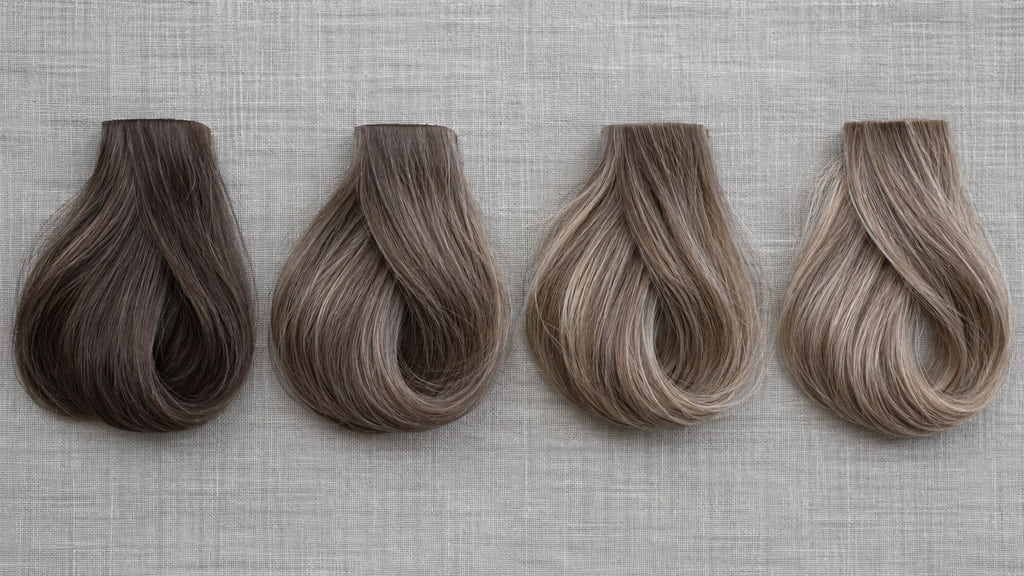
The samples are illustrative. Their left-to-right order suggests deeper mushroom brown, smoky taupe, ash bronde, and a lighter soft ash brown. They cannot show how a dye will appear on your own hair. Keep the image beside real salon references, and compare each option in neutral light.
| Direction | Tone and visual effect | Current base to discuss | Ask about |
|---|---|---|---|
| Muted ash or mushroom brown | Brown depth with a softened cool-gray or beige reflect; mushroom references may have more visible dimension than a uniform ash brown. | A brunette base, especially if the lengths have previous color. | Whether the existing warmth can be adjusted and how the cool reflect will be refreshed. |
| Smoky taupe | A brown-to-beige direction with a subdued, slightly gray cast; less distinctly brown than the first option. | Light brown or dark blonde, including any previously lightened sections. | Whether the reference needs a depth change, a tone change, or both. |
| Soft ash bronde | A brown-blonde mix with a shadowed base and fine lighter pieces rather than broad bright panels. | Blonde or brunette hair; the amount of lightening depends on the actual starting base. | Placement, contrast, grow-out, and the cost of keeping lighter pieces muted. |
“Mushroom,” “taupe,” and “bronde” describe looks, not standardized dye codes. Babylights—very fine lightened sections—can add dimension to a bronde reference without making every strand equally light. Numbers such as levels 5–7 may label examples in a shade chart; they are not Soft Summer boundaries. A colorist can use your preferred photograph and the chosen product line’s chart to translate the look into a plan.
Choose a direction from your current base
If your hair is brunette, begin with a brown reference close to your current depth and a second, slightly lighter taupe option. A colorist can check whether your lengths contain previous dye and whether the difference you want involves changing depth, reflect, or both. If your hair is blonde, compare a softly shaded bronde with a taupe that keeps less contrast between roots and lengths. Neither example guarantees a particular service or lift.
Previously colored hair needs its own conversation. Tell your colorist what has been applied to the lengths, where any lightened sections begin, and whether gray coverage or blending matters to you. A photograph cannot reveal that history, porosity, or what a strand will do during a service. Wella’s technical guide separates level from tone and uses its own reflect codes—for example, /1 for Gray Ash, /3 for Gold, and /7 for warm Brown. Those codes explain Wella’s terminology; they are not a universal translation for “taupe” or a recipe to use at home.
Bring two references at a similar depth: one quieter brown or taupe and one with a little more light. In a hair color salon brief, note your current color, previous services, how much contrast you want, and whether you are willing to schedule tone refreshes or highlight maintenance. Ask what each reference would require on your hair and whether a strand test would help before a larger change.
Keep warmth and contrast a matter of preference
A vivid copper or bright gold reference has more warmth and saturation than the muted Soft Summer palette described above. You can still choose that as an intentional, livelier contrast. Place it beside a brown or beige-ash reference of similar depth so the difference comes from tone rather than a large jump in lightness. Likewise, blue-black gives a stronger dark edge than muted brown; it is an option when you want that effect and understand the work involved in changing it later.
Make the final comparison practical: Which two references look distinct enough to be useful? Do you prefer a fairly even color, or fine pieces that add dimension? Which option fits the upkeep you can commit to? Our hair color maintenance guide helps turn “low maintenance” into a discussion about refreshes and grow-out. A virtual try-on can help compare broad directions, but it cannot predict your final salon color. Bring both references to a colorist, discuss your starting base, and use a strand test when appropriate.
Frequently asked questions
Does Soft Summer require hair at levels 5–7?
No. That range can describe some muted brown and bronde examples, but it is not a requirement of the palette or a dye formula. Compare colors at a depth that makes sense for your current hair and the change you want.
Are mushroom brown and ash brown the same?
The names can overlap, but they do not promise the same finish. A mushroom-brown reference may show several gray, beige, or silver-looking reflects, while an ash-brown reference may look more uniform. Compare photographs in similar light and tell your colorist which details matter to you.
How does this differ from Cool Summer hair color?
Soft Summer puts the muted effect first in the seasonal framework used here; Cool Summer emphasizes a clearer cool direction. Compare the same shade depth in both guides to see which effect you prefer. A selfie cannot confirm either season.
Continue exploring seasonal color directions
- Hair Colors for Cool Summer: Ash Shades and Gray-Blending Choices
- Cool Winter Hair Colors: Crisp Espresso, Blue-Black, and Icy Platinum Tones
- Hair Colors for Warm Spring: Honey, Caramel, and Golden Harmony
- Hair Colors for Deep Winter: Espresso, Dark Chocolate, and High-Contrast Depth
- Soft Summer vs. Soft Autumn Hair Color: Compare Muted Cool and Warm Tones