
Start with the change you want
Choose between demi-permanent and permanent hair color by the change you want and the specific product your colorist proposes. If you want to refresh a reflect or blend some silver without asking to lighten your natural base, a demi-permanent option may be worth discussing. If your goal requires lifting natural pigment or a more opaque result, ask whether a permanent formula is appropriate. Neither label promises a particular shade, gray result, or maintenance schedule.
The distinction matters most when “lighter” is part of your request. Joico’s LumiShine technical guide describes the ability to lift pigment in natural hair as a key difference for its permanent haircolor. That is a product-system explanation, not a promise that ordinary permanent color will remove old dye from colored lengths. Tell your colorist where your hair is natural and where it has previously been colored before deciding on a service.
Example: You like a lighter-looking dark-blonde reference, but your ends have an older dark color. The reference can clarify the depth you want; it cannot show whether your existing color can reach it with a proposed permanent formula. Your colorist may need a different plan for the natural roots and the colored ends. If the words “depth” and “reflect” are getting mixed together, use the hair color levels and tones guide to describe them separately.
Compare what the two categories can do
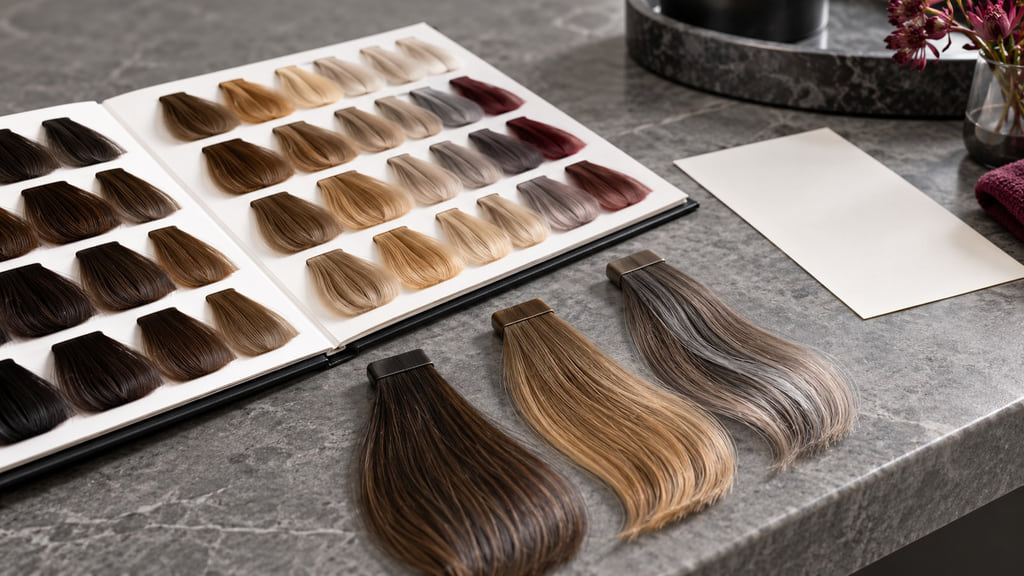
The shade book and loose samples are discussion references: an untouched dark base, a natural dark-blonde direction, and a silver-mixed strand. They do not show a before-and-after service. Compare the goal in each row with your own color history, then ask what the named line is intended to do. Product instructions and starting hair matter more than the category name alone.
| Decision point | Demi-permanent discussion | Permanent discussion |
|---|---|---|
| Main change | Is this formula intended to deposit or refine a color direction on my starting hair? | Is this formula intended to change depth as well as tone, and where could it act on natural pigment? |
| Natural base | What will a deposit look like over my natural depth? | Does the named product allow the natural base to be lifted for this goal, and under what conditions? |
| Previously colored lengths | Could older color affect how a new reflect appears? | What separate assessment or service is needed for the old dye? Do not assume permanent color will lift it. |
| Silver or gray hair | Would this product give a translucent blend or a more opaque result? | What opacity is realistic on my hair with this exact formula? |
| Roots and upkeep | How might the deposit change as it wears, and what would new growth look like? | How distinct might the root line be as natural hair grows in, and what upkeep would I choose? |
Use the table to narrow the question, then ask for a plan for each part of your hair. A demi-permanent result can fade, but the way it looks while wearing depends on the formula and starting canvas. Permanent color can leave a more visible difference between colored hair and new growth when the chosen shade differs from your base; the exact line is not predictable from the label alone. Our hair color maintenance guide covers the separate question of refreshes, fading, and grow-out.
Keep gray goals separate from product labels
“Blend my gray” and “make it opaque” are different requests. Blending may leave silver strands visible but less contrasted against neighboring hair. Coverage asks for a denser-looking result. Neither word tells your colorist how much silver you want to keep visible, so point to the area that matters and say what you would like to see there.
Wella Professionals describes different results within its demi-permanent range: its Color Touch Plus example is presented for more coverage, while Shinefinity is described as a subtler, translucent gray blend. These are examples from one maker, not a coverage percentage or fading timetable for every demi-permanent haircolor. The useful question is which named product your colorist recommends for your desired opacity and why.
Example: If you want some silver to remain part of the look, ask for a translucent blend and discuss how it may appear in different light. If you want less visible silver at the roots, say that directly; your colorist can compare the options against your starting hair. Write down the area, desired opacity, and tolerance for a visible root line in your hair color salon brief.
Choose with your colorist and product instructions
Bring your color history to the consultation: past dye, lightening, root work, and any different-looking sections. A photo can show the direction you prefer, but it cannot reliably identify previous color, porosity, or what the proposed product can achieve on your hair. Virtual try-on can help you compare directions; it cannot supply a formula or guarantee the salon result. Ask whether a strand test would help check a substantial change or uneven starting canvas.
Also ask for the exact product name and its own testing and aftercare directions. The FDA advises following package directions and warnings and doing the recommended patch test for hair dye. The word “demi” does not mean a product is harmless or exempt from those directions. Do not substitute a generic mixing ratio, processing time, or home schedule for the instructions supplied with the product and your colorist’s assessment.
Take this to your consultation: “I want to change the depth, the tone, or the visibility of my silver in this area. These sections are natural; these have older color. Which named demi-permanent or permanent product fits the goal, what can it do on each area, and how should we check the result before I commit?”
Prepare your salon brief with those details and the references you want to discuss.
Frequently asked questions
Will permanent color remove my previous dark dye?
Do not assume so. The lifting distinction cited above concerns natural pigment in Joico’s product explanation, not removal of every prior dye. Show your colorist which lengths were colored and ask for an assessment of those areas before choosing a new shade.
Can demi-permanent color blend gray?
Some named products can. The visible opacity varies by formula and starting hair. Decide whether you want silver to remain visible, then ask your colorist to compare that goal with the exact product they intend to use.