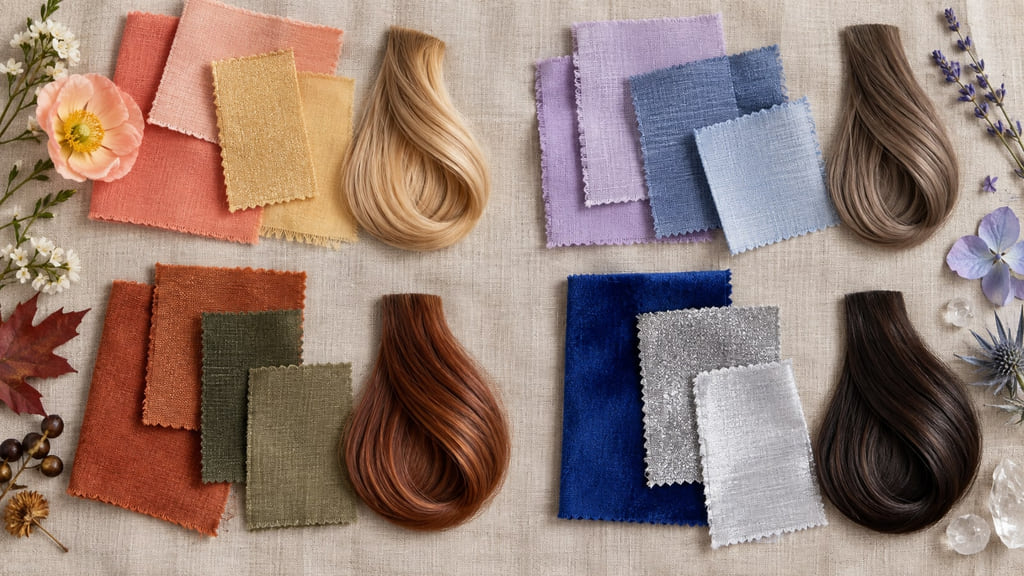
Use temperature, depth, and softness as separate axes
A seasonal palette organizes visual references; it does not prescribe one hair dye. Temperature describes whether a shade leans warm or cool, as golden brown and ash brown can at similar depth. Depth describes how light or dark the hair looks. Softness describes how muted it appears beside a clearer, more vivid shade. Compare one axis at a time so you can name what you actually prefer.
The Concept Wardrobe's 12-season system divides Spring, Summer, Autumn, and Winter into three sub-seasons each. Within that system, Soft Summer puts muted color first and cool color second, while True Summer puts cool color first and muted color second. Our hair colors for soft summer guide turns one relationship into shade examples.
Treat a season as a working hypothesis. White balance, daylight, surrounding fabric, makeup, and editing can change how a photograph reads. Dyed hair can alter visible contrast without proving a different season. A photo alone cannot reliably establish undertone, starting base, porosity, or color history. Keep shades you like in view even if they fall outside a suggested palette.
Read the seasonal comparison matrix
The names and palette priorities follow The Concept Wardrobe's seasonal guide. Its True labels are sometimes called Warm or Cool elsewhere; its Dark labels are sometimes called Deep. Hair-color examples below are editorial references, not required shades or promises about what your starting hair can reach.
| Season in this system | Palette priority | Hair-color examples |
|---|---|---|
| Light Spring | Light, then warm | Light golden blonde, warm beige, gentle strawberry blonde |
| True Spring | Warm, then bright | Honey blonde, golden brown, clear copper |
| Bright Spring | Bright, then warm | Bright golden blonde, vivid copper, clear brunette |
| Light Summer | Light, then cool | Cool beige blonde, pearl blonde, light ash brown |
| True Summer | Cool, then muted | Cool dark blonde, ash brown, cool cocoa |
| Soft Summer | Muted, then cool | Mushroom brown, smoky taupe, soft ash blonde |
| Soft Autumn | Muted, then warm | Soft chestnut, caramel brown, muted auburn |
| True Autumn | Warm, then muted | Copper, cinnamon brown, warm chestnut |
| Dark Autumn | Dark, then warm | Dark chocolate, deep auburn, warm espresso |
| Dark Winter | Dark, then cool | Deep espresso, soft black, dark berry brown |
| True Winter | Cool, then bright | Cool espresso, blue-black, sharply cool blonde |
| Bright Winter | Bright, then cool | Glossy black, vivid cool berry, sharply toned platinum |
Start with two examples at about the same depth. For example, compare muted mushroom brown with a cooler, clearer ash brown; the difference you notice is then less likely to be only lightness. The hair colors for cool summer guide explores the cooler direction. These examples help name a preference; they cannot assign your season.
Choose a detailed guide
Use the matrix to identify the difference you want to explore, then read the guide for that narrower decision. For a quieter, muted cool effect, compare Soft Summer hair colors. If coolness is the stronger priority, read Cool Summer hair colors. That guide covers a similar direction to this matrix's True Summer row, although naming varies across seasonal systems.
For clear warmth, see Warm Spring hair colors, broadly corresponding to True Spring here. For dark cool shades, Deep Winter hair colors explores the deeper route; Cool Winter hair colors compares coolness across a wider depth range. The remaining matrix rows are comparison points here; each does not imply a dedicated guide exists.
When two palettes both feel useful
You need not force a label before choosing references. Preference, lighting, and previously colored hair can affect which examples seem useful. The source system puts True Summer on the cooler side of Summer, with softness still present. That describes a palette; it is not a test with fixed accuracy, and you may prefer another effect for your hair.
For example, hold depth steady and compare a soft cool brown with a soft warm chestnut. If both support the look you want, keep both. In consistent neutral light, notice whether you prefer the temperature, contrast, or upkeep of one option. Compare a clearer warm idea in the hair colors for warm spring guide, or a darker cool one in hair colors for deep winter. These are routes for exploration, not automatic classifications.
Your starting color and color history matter when a reference becomes a salon plan. Dark or previously colored hair may need a different process to reach a pale shade; a season name cannot settle feasibility, fading, or maintenance. Bring two references and your known color history to a colorist. Ask which direction is realistic for your starting point and whether a strand test is appropriate before a major change.
Frequently asked questions
Can my hair color alone tell me my season?
No. Hair color is one visible part of an overall styling comparison. Dyed hair, lighting, and camera processing can alter the impression, and this chart does not diagnose a season from one feature.
What if two seasonal palettes appeal to me?
Keep both as references. Compare shades at similar depth to separate temperature from softness, then choose the effect and upkeep you prefer. A single seasonal label is not required to make that decision.
Explore this topic
- Hair Colors for Soft Summer: Compare Muted Brown, Taupe, and Bronde
- Hair Colors for Cool Summer: Ash Shades and Gray-Blending Choices
- Cool Winter Hair Colors: Crisp Espresso, Blue-Black, and Icy Platinum Tones
- Hair Colors for Warm Spring: Honey, Caramel, and Golden Harmony
- Hair Colors for Deep Winter: Espresso, Dark Chocolate, and High-Contrast Depth
- Soft Summer vs. Soft Autumn Hair Color: Compare Muted Cool and Warm Tones