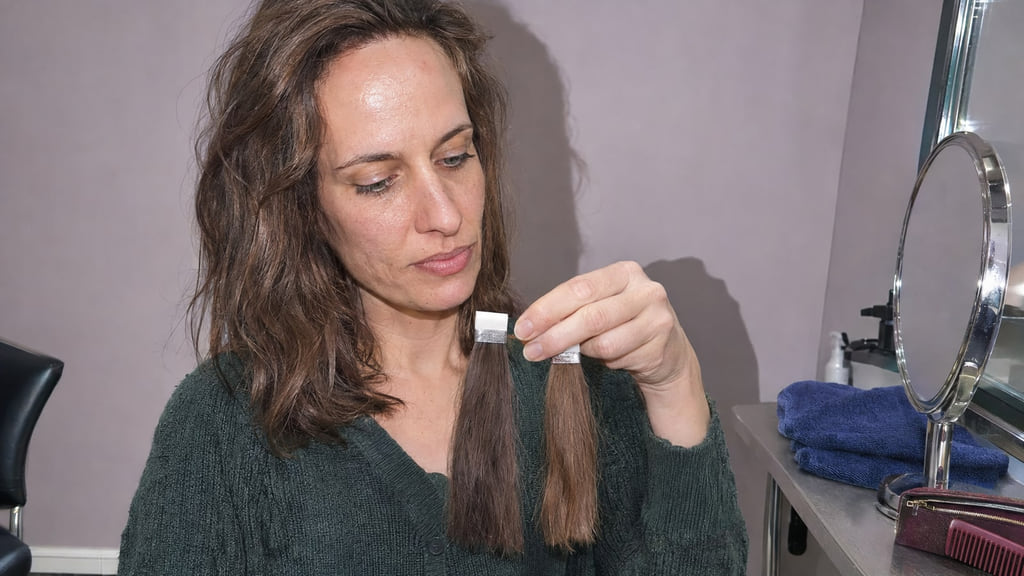
Both palettes emphasize softness
In The Concept Wardrobe’s Soft Summer guide, muted color is the primary characteristic and cool color is secondary. Its Soft Autumn guide also puts muted color first, with warm color second. That is the useful distinction for hair references: compare equally quiet colors, then notice whether their reflect leans cooler or warmer. These are categories in a named styling system, not a diagnosis that a photograph can confirm.
Softness here means a subdued color effect rather than a vivid or sharply contrasted one. A brown can look muted and cool-leaning; another brown can look equally muted with a soft beige warmth. Neither category demands a particular hair depth, dye level, or salon formula. If you want examples within the first category, the separate guide to hair colors for soft summer covers brown, taupe, and bronde in more detail.
Compare muted cool and muted warm at equal depth
Start with one pair of medium-brown references. Keep their apparent lightness close: a muted cool brown may show a taupe or gray-brown reflect, while a muted warm brown may show a restrained beige-brown reflect. Then repeat with a bronde pair, keeping the root depth and amount of lighter dimension similar. The point is to isolate temperature. A pale ash blonde beside a dark copper brown changes depth, saturation, and temperature at once, so it cannot answer this question clearly.
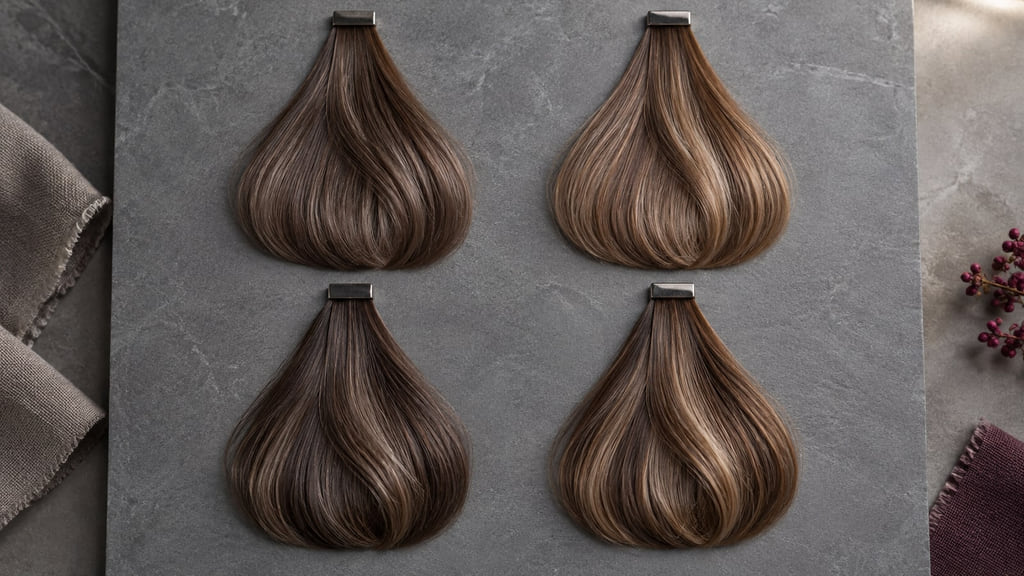
The upper samples illustrate a brown pair; the lower samples show a slightly deeper, dimensional pair. Look at the reflect within each row, rather than comparing the top sample to the bottom sample. These are illustrative hair samples under one light, not evidence that either color will look identical on your hair. The subtle difference can also vary across screens and photographs.
| Keep similar | Muted cool reference | Muted warm reference |
|---|---|---|
| Brown depth | Soft taupe-brown or neutral-cool brown reflect. | Soft beige-brown reflect, without vivid copper. |
| Bronde depth | Subdued cooler ribbons within a brown-blonde mix. | Subdued beige ribbons within a similar brown-blonde mix. |
| Light and texture | Use neutral light and a clear view of the fibers. | Use the same light, camera angle, and amount of dimension. |
For a broader explanation of how a season can organize comparisons without prescribing a shade, read hair color by color season. For this decision, stay with two references at a time and describe their visible color. Words such as “cool” and “warm” are useful directions, but they do not identify the coloring service your current hair would need.
Avoid tests that change several variables
Eye color, vein color, or a single selfie is not a reliable tie-breaker between these palettes. The camera changes the way a scene looks: Nikon explains that white balance responds to the color temperature of the light. A warmer camera setting can make a neutral brown look more golden; a cooler setting can flatten the warmth you were trying to compare. The camera’s rendering is useful for seeing a direction, but it does not measure your undertone.
Make your visual test simpler. Put two references side by side at a similar depth, with comparable brightness and no strong color filter. If you compare virtual previews using your own photo, keep the same image and lighting for both directions. Then ask which hair reflect you prefer and whether the difference is noticeable enough to matter to you. This helps compare options; it cannot establish your seasonal category, starting hair base, porosity, color history, or the result a salon can achieve.
If you want to consider skin and hair together without treating a photo as a diagnosis, see hair color for skin tone. You may also prefer both references for different reasons. That is a valid outcome of the comparison, not a failed test.
Choose a hair direction without forcing a label
Save one muted cool reference and one muted warm reference at the depth you actually want. For each, name the feature you would keep: “the quiet taupe-brown reflect” or “the soft beige warmth without bright gold.” Note whether you want an even finish or subtle lighter pieces. This gives a colorist a concrete visual request even if you never settle on Soft Summer or Soft Autumn.
Copy and adjust this comparison: “I like the depth in both references. I want to compare the muted cool-brown reflect in the first with the muted beige-brown reflect in the second, keeping the amount of dimension similar. Which direction fits my current color and the upkeep I am comfortable with?”
Bring both images and share what you know about previous color or lightening. A virtual try-on can help compare broad directions on your photo, but it does not predict a precise result. A colorist can assess the starting hair, discuss what is feasible, and decide whether a strand test is useful before a larger change. For more muted cool references, return to hair colors for soft summer; for the wider framework, read hair color by color season. You can leave the consultation with a preferred direction and a practical plan without treating a seasonal label as a requirement.
Frequently asked questions
What do Soft Summer and Soft Autumn have in common?
Both emphasize muted color in The Concept Wardrobe’s named system. The secondary direction differs: cool for Soft Summer and warm for Soft Autumn. For hair, compare references of similar depth and softness to make that difference easier to see.
Can I like both muted warm and muted cool hair?
Yes. You can use both as salon references, decide which reflect you prefer, or choose between them based on your current hair and upkeep goals. A seasonal label is optional for this decision.