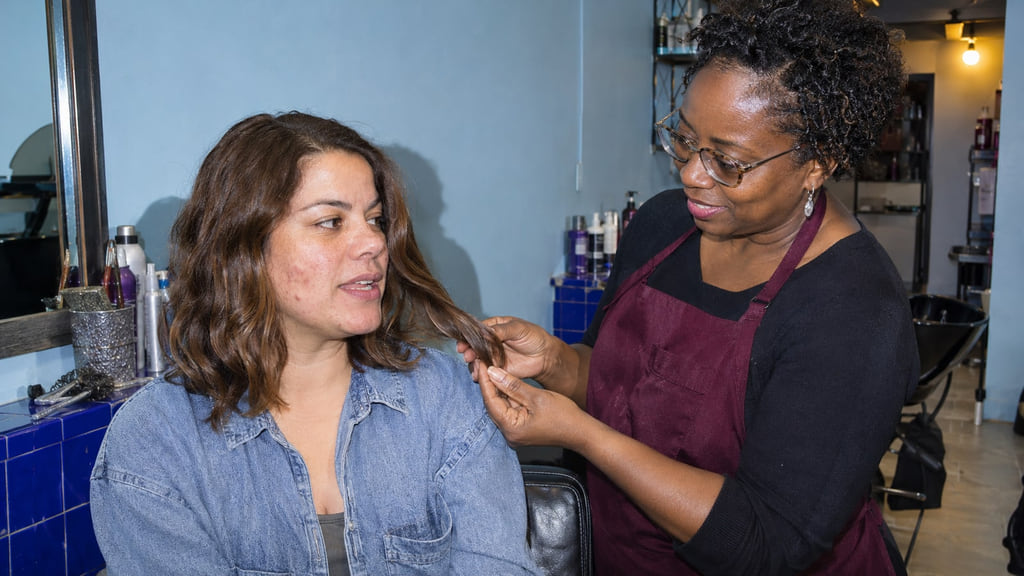
Gloss and toner can overlap
When you compare a hair gloss vs. toner, start with the effect you want, not the service name. Toner describes a tone-refining job: adjusting the color reflect you see, often after coloring. Gloss can describe a shine-focused finish or a product that also adds a subtle tint. A toning gloss can address both appearance of tone and shine. The names on a salon menu do not, by themselves, tell you the formula, how much color it deposits, or how long the effect will last.
There is a concrete example of that overlap: L’Oréal Paris lists its Le Color Gloss One Step In-Shower Toning Gloss in its toner range. That placement shows how one manufacturer uses the terms for a named product. It does not establish that every gloss works like that gloss, or that all toners are the same kind of color. Ask your colorist to name the product and explain the intended change on your hair.
The upkeep question comes after the product question. A tone refresh and a softer root transition solve different visual problems, so the right follow-up depends on the original service and your starting hair. For the broader plan, read our hair color maintenance guide.
Compare clear gloss, tinted gloss, and toner
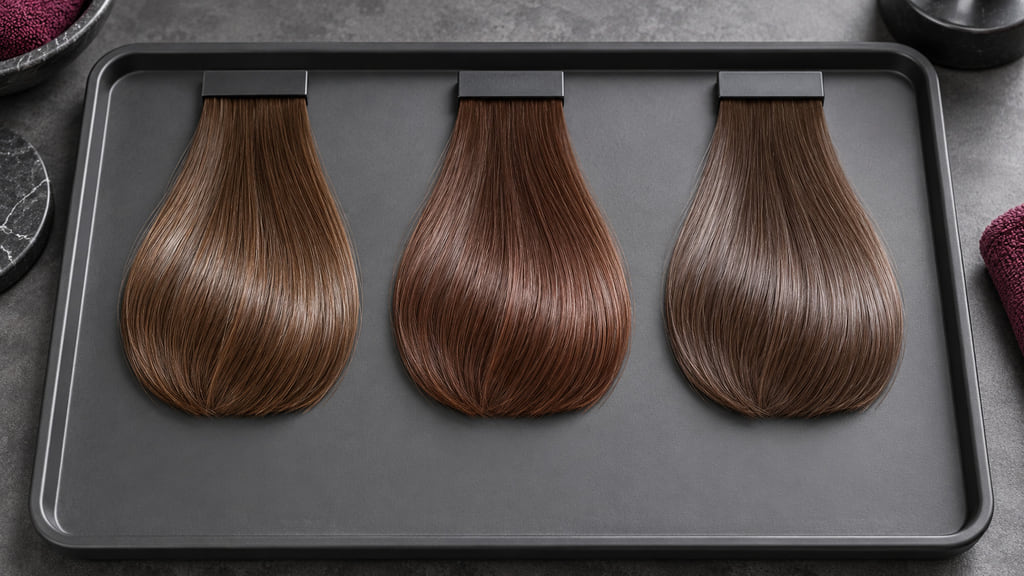
The photograph above is a set of illustrative references under similar light. It separates visible sheen from a small shift in reflect; it does not document a treatment or predict a result on your hair. Compare the three intentions below, then confirm which one the actual product is designed to deliver. If a shade seems darker or lighter as well as warmer or cooler, the hair color levels and tones guide explains that separate depth question.
| Option | Intended effect | Is color added? | Shine | Starting point and limits | Confirm the product |
|---|---|---|---|---|---|
| Clear gloss | Emphasize the finish without requesting a new color reflect. | A clear product is not chosen to add a visible tint. | Shine is usually the reason to ask about it. | Ask what the finish could look like on your current hair; do not expect clear gloss to correct every unwanted tone. | Is this product actually clear, and what change should I expect? |
| Tinted gloss | Add a subtle color direction. | Yes, if the named formula contains color. | A glossier appearance may be part of the intended finish. | The tint can appear different over natural hair, highlights, and previously colored lengths. | How transparent will the tint look on each area? |
| Tone-refining toner | Adjust an unwanted or desired reflect in a particular area. | It may deposit tone; the mechanism and strength depend on the product. | Do not assume shine is its main purpose. | Starting tone and prior color affect what needs refinement; the name alone does not predict the result. | Which tone is this product meant to change, and what will it leave alone? |
A clear gloss should not be expected to correct every yellow, orange, or other unwanted reflect. A tinted gloss may also act as a toner when its purpose is tone refinement. Conversely, the word “toner” does not tell you whether a product will make the hair look shinier or whether it needs a separate developer. L’Oréal’s toner page describes its own products as examples, with different uses and directions. Use the specific product instructions rather than a category-wide rule.
Choose from your starting color
Your starting point changes the consultation. Natural hair, lightened highlights, and previously colored lengths can respond differently to the same proposed finish. A photograph or virtual try-on may help you compare color directions, but it cannot reveal your full color history, porosity, or the result a salon product can achieve. Tell your colorist what has been applied to your hair, including any lightening or color on the lengths, and ask whether a strand test is useful for the proposed change.
- Natural hair: If you mainly want a different-looking finish, ask, “Would a clear or tinted option create the effect I mean on my uncolored hair?”
- Highlights: If some pieces look warmer than you want, ask, “Which sections would the product tone, and what could it do to the pieces I already like?”
- Previously colored lengths: If old color and new growth look different, ask, “Would one product make these areas look more even, or do they need separate plans?”
Product names also cannot specify an identical gray result. Wella Professionals contrasts Color Touch Plus and Shinefinity as examples with different degrees of gray blending or coverage. That is a reason to ask about the named formula and desired opacity, not to assign the same outcome to every demi-permanent gloss or toner. Record your starting color, past services, and reference images in the hair color salon brief.
Ask these questions before the service
Bring one reference for the depth you want and one for the reflect or sheen you want. Say which part of each image matters to you. A cooler reflect, a transparent tint, and more shine can be different requests even if they are grouped under “gloss” on a menu. Ask your colorist to compare the references with your hair in consistent light rather than relying on a screen image alone.
- What is the exact product and shade, and is the goal shine, tone refinement, a subtle tint, or a combination?
- How transparent or opaque should I expect it to look over my natural hair, highlights, and any older color?
- Does this specific product require a developer or another step? What are its own instructions and aftercare?
- What visible change should I watch for as it wears, and when would you reassess rather than repeat it?
Do not choose a processing time, mixing method, or repeat schedule from a generic gloss-versus-toner comparison. Those decisions belong to the named product and a professional assessment. If your goal is a major depth change, ask whether toning or glossing is even the appropriate service. A strand test and a colorist’s consultation can check feasibility; a digital preview cannot guarantee the finished color.
Copy this into your appointment notes: “I like the depth in this reference, but I want to discuss the reflect and shine separately. Which named product would you use on my starting hair, what change should I expect, and how would we check the result?”
Frequently asked questions
Can a gloss also be a toner?
Yes. A toning gloss is one example of the overlap: it is presented as a gloss and intended to refine tone. Confirm what the specific formula does on your starting hair instead of treating either label as a fixed service category.
Will a clear gloss correct every unwanted tone?
No. A clear product is not a reliable answer to every unwanted reflect. Name the tone you want to change and ask whether a tinted or tone-refining product is appropriate for the hair you have now.