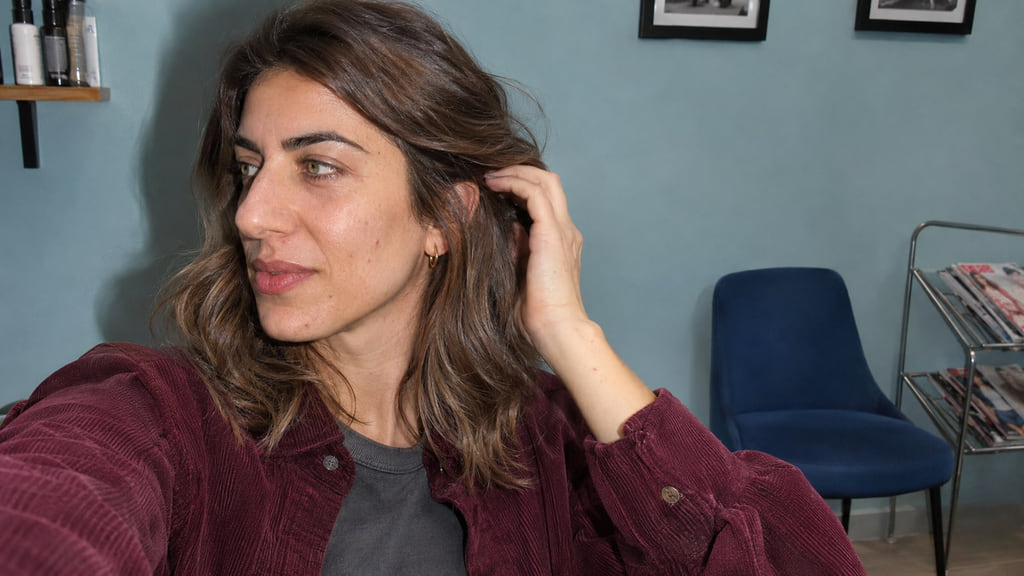
These names are not universal formulas
If you are deciding between mushroom brown and ash brown hair, do not assume the names identify two fixed shades. L’Oréal Paris describes mushroom brown as a mid-toned brunette direction with gray, silver, or beige reflects and distinguishes its dimensional mushroom example from a more even ash brown. Matrix, in its Ash Brown Hair description, says the cool brown hue has also been called “mushroom brown.” Those are two manufacturers' uses of shade language, not a universal rule for every salon or color line.
This overlap matters when you save inspiration photos. A reference labeled “ash brown” might show several lighter beige ribbons, while a “mushroom brown” reference might look comparatively even. Ask what you can actually see in the hair rather than treating a caption as a formula. A label also cannot reveal the starting color, previous services, or lighting behind the photo.
The muted, cool look may also appear in seasonal styling discussions, but a season does not prescribe one dye shade. If that framework is useful to you, see hair colors for Soft Summer for the separate palette question.
Compare depth, beige reflect, and dimension
Break each reference into three observable parts. Depth is how light or dark the brown appears. Reflect is the visible color direction, such as cool gray-brown or softer beige-brown. Dimension is the variation between sections: an even-looking surface, fine lighter pieces, or a more noticeable mix. “Mushroom” does not supply a fixed level, and “ash” does not tell you how much dimension a colorist should place. For a fuller explanation of depth versus tone, use our hair color levels and tones guide.
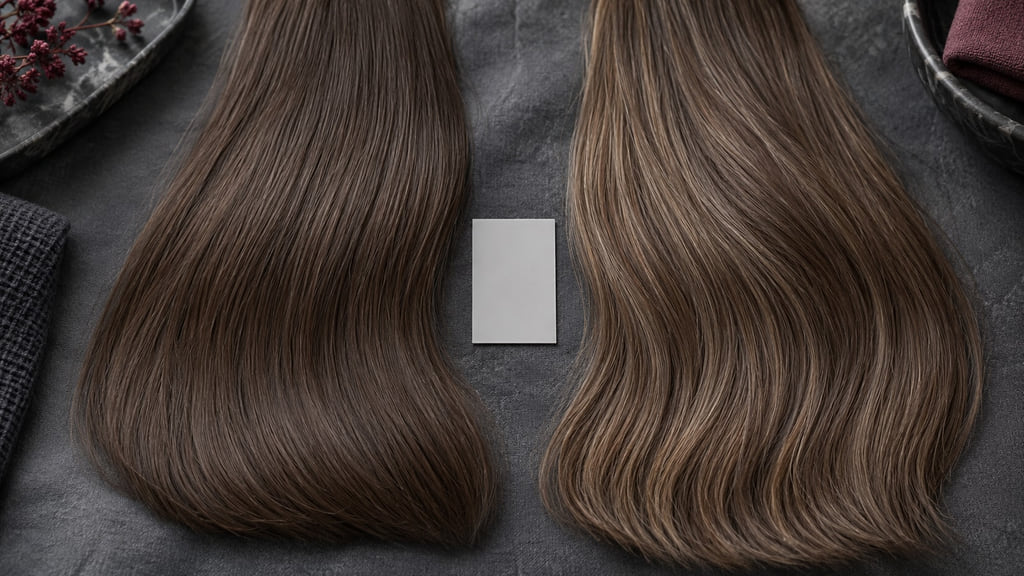
In these illustrative samples, the left panel reads relatively uniform and cool. The right panel stays in a similar brown depth but has softer beige-brown variation. That is one useful comparison, not the definition of every ash or mushroom brown photo. The neutral card and similar lighting make the difference easier to notice; they do not turn the image into a measured shade chart.
| Look at | More even cool-brown example | More dimensional beige-brown example | What to ask |
|---|---|---|---|
| Depth | A medium brown that stays fairly consistent. | A similar overall brown depth, with some sections catching more light. | Which reference is closer to the depth I want at the roots and ends? |
| Reflect | A restrained cool or neutral-cool cast. | A muted beige-brown cast mixed with cooler brown. | Do I want visible beige, and which warm reflects do I want to avoid? |
| Dimension | Little contrast between sections. | Subtle variation rather than stark light streaks. | Where should the lighter pieces appear, if any? |
Compare photos at similar brightness. A darker exposure can make beige pieces disappear; warm indoor light can make a neutral brown look golden. Save a couple of references that show the same feature you want in different light, then tell your colorist which parts of each image matter. If the references disagree, choose the depth and placement first, then discuss the exact reflect.
Choose a reference from your starting color
The path to either direction depends on what is already in your hair. A cool brown reference on natural brunette hair is a different conversation from the same reference on lightened highlights or previously colored lengths. Existing color can make the roots and ends behave differently. A photograph cannot reliably identify your base, porosity, or color history, and an inspiration image is not a ready-made recipe.
Wella's technical guide is a useful reminder that level and tone are separate, and that its tone codes belong to its own system. A shade number from one line should not be copied into a request for another. Your colorist can assess your starting hair, the amount of lightness or cooling you want, and whether a strand test is appropriate before proposing a service.
- Natural brown hair: Pick a reference close to your current depth if you mainly want a cooler or softer-looking reflect. Ask whether the difference you see requires changing the overall color or placing some lighter pieces.
- Highlighted hair: Point to the sections whose brightness and placement you want to keep. Ask how the proposed brown direction would relate to them.
- Previously colored hair: Share what you know about prior color and lightening. Ask how the new growth and lengths may need to be handled separately.
Keep the visual goal distinct from the service plan. The hair color salon brief helps you record your starting point, reference photos, preferred depth, and upkeep limits before the appointment.
Write a precise salon request
Lead with what you want to see, then name what you do not want. “Mushroom brown” can be useful shorthand, but a description such as “cool-neutral medium brown with subtle beige dimension” gives the colorist more to discuss. You can add whether the lighter variation belongs near the face, through the lengths, or mostly toward the ends. If you prefer an even result, say that instead of assuming “ash brown” communicates it.
Copy and adjust this request: “I like the medium-brown depth in this photo and the soft beige-brown variation in this one. I want the overall result to read cool-neutral, without strong gold or obvious silver streaks. Can we compare these with my current color, discuss where any lighter pieces would go, and decide what upkeep the plan would need?”
Bring both images and explain which feature each one illustrates. A virtual try-on can help you compare broad directions on a photo, but it cannot show the exact salon result or replace a strand test and a colorist's assessment. The practical choice is the reference whose depth, reflect, and placement you can describe clearly—and a service plan that fits your starting hair.
Frequently asked questions
Is mushroom brown a standardized formula?
No. The cited manufacturers use overlapping but different descriptions. Show the actual color reference and discuss its depth, reflect, and dimension with your colorist.
Must mushroom brown include highlights?
No fixed placement follows from the name alone. Some references show visible lighter pieces; others look more even. Point out the amount and location of dimension you want in the specific image you bring.