Olive does not name a hair-color formula
“Olive” describes an impression of skin color; it does not tell you that your skin is always warm, that you need a particular hair dye, or that one shade will suit everyone with that description. Skin depth and the contrast you want are separate decisions. L’Oréal Paris’s olive-skin styling guide discusses warm, cool, and neutral sub-tone options. Those are examples within its guide, not a diagnosis you can make from a selfie. For a broader explanation of these separate inputs, read our hair color for skin tone guide.
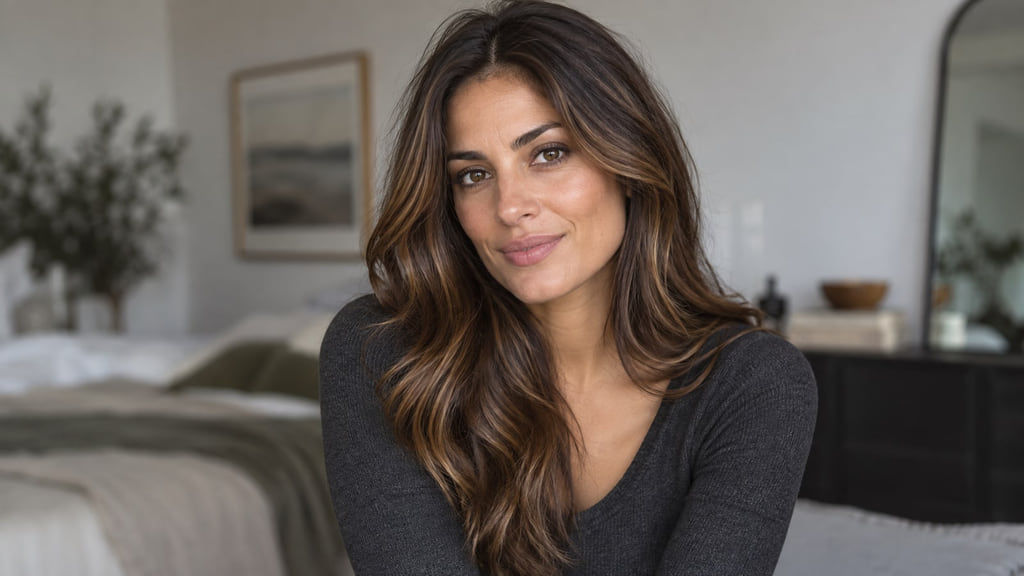
Start with a reference near your current hair depth. Then compare a neutral, a cooler, and a warmer version without changing everything else at once. For example, a neutral mocha and a softly warm chocolate brown can show whether the added warmth is an effect you actually want. A cool mushroom brown or stronger copper can also be a deliberate choice; neither is automatically ruled out by the word olive. Keep the person, lighting, and crop as consistent as you can when you compare references.
Keep the question specific: “Do I prefer more depth, more warmth, or more contrast?” That gives you a useful next step even when you cannot confidently label your undertone.
Compare depth before warmth
Depth means how light or dark the hair looks; tone means the color reflect you notice within that depth. Wella Professionals’ technical guide separates level and tone in its own color system. Its codes are brand specific, so a salon conversation should begin with a visual reference rather than an assumed universal number. First decide whether you want the hair to sit close to your current depth or create a more pronounced contrast with your skin, brows, and eyes. Then compare tone within that choice.
Pale, medium, and deep olive are descriptions of skin depth, not fixed boxes, ethnic categories, or instructions to choose light or dark hair. A pale olive complexion may be worth comparing with both a medium mocha and a deeper espresso to see which contrast feels right. At a medium skin depth, try a soft chestnut beside a neutral brown of similar darkness. With deep olive skin, a dark cocoa base and a version with restrained caramel pieces can show how placement changes the overall contrast. These are comparison examples, not predictions about an individual face or hair.
| Skin depth | First reference | Second reference | What changes |
|---|---|---|---|
| Pale olive | Medium mocha brown | Deep espresso brown | Hair depth and contrast, while warmth stays restrained |
| Medium olive | Neutral brown | Soft chestnut at similar depth | Mostly tone, with a comparable overall depth |
| Deep olive | Dark cocoa base | Dark cocoa with subtle caramel placement | Where lighter pieces appear against the base |
The table gives you a starting pair, not a ranking. If the lighter pieces attract more attention than you want, reduce their contrast or their placement before abandoning the color family. For a full consultation checklist once you have a preference, use the hair color salon brief.
Test two brown or blonde directions
Compare two references that answer one question. If you are considering brunette, begin with two medium browns at roughly the same depth: one neutral mocha, one cooler mushroom brown. Look at the difference in reflect before adding a warmer chestnut or toffee option. Comparing a pale blonde with blue-black would change depth, contrast, and tone together, so it would not tell you which change you preferred.
If blonde is the goal, compare a beige blonde with a honey-beige at similar lightness. A deeper root or lowlight is another variable you can test if you want the blonde to retain more depth beside your face. Dirty blonde and beige blonde are useful descriptive references, but the shade name alone says little about the lift needed from your present hair. Previously colored or dark hair may require a different process than a preview suggests. Ask a colorist what is feasible with your actual base and history, and request a strand test before committing to a major change.
Keep your comparison in similar light. Nikon’s explanation of white balance shows why a camera can render the same scene differently under different light or settings. Warm indoor bulbs can make a neutral brown appear golden; a cool camera setting can pull a beige reference toward ash. If you use photos or virtual previews, treat them as ways to narrow a visual direction, not as proof of undertone or the finished salon result. Our what hair color suits me guide covers the wider decision process.
Example comparison: Save one neutral brown and one cooler brown at similar depth. Note which one gives you the contrast you prefer in daylight. If both feel too muted, compare one warmer brown at that same depth rather than jumping immediately to a much lighter shade.
Prepare a reference your colorist can use
Your present hair, not the label olive, determines the practical coloring conversation. Tell your colorist your natural or current base as best you know it, any previous permanent color or lightening, and the upkeep you are willing to do. Our guide to hair color levels and tones explains the depth language you can use to describe your references. Photos cannot reliably establish color history, porosity, or the lift your hair can reach. A colorist can compare your references with your hair in person and use a strand test when the change calls for it.
Bring two references with a clear difference: the depth you prefer and the tone or placement you want to test. You can say, “I like the depth in reference A and the softer warmth in reference B. My color history is [what I know]. I want to discuss how much change is realistic, where to place any lighter pieces, and what maintenance each plan needs.” That is more useful than asking for a shade name without a picture. The salon brief guide has a fuller template for the appointment.
Can olive skin work with blonde references?
Yes. Compare blonde directions at the depth and contrast you want, such as neutral beige beside honey-beige. A darker root is another option to test. Your starting hair and color history affect the process, so use the references to start a consultation rather than to promise an identical result.
Does olive always mean a warm undertone?
No. Olive describes a visible color impression, and styling guides discuss more than one sub-tone direction. A photo, especially one with uncertain lighting or white balance, cannot reliably assign a single undertone. Compare cool, neutral, and warm references in consistent light and choose the effect you prefer.