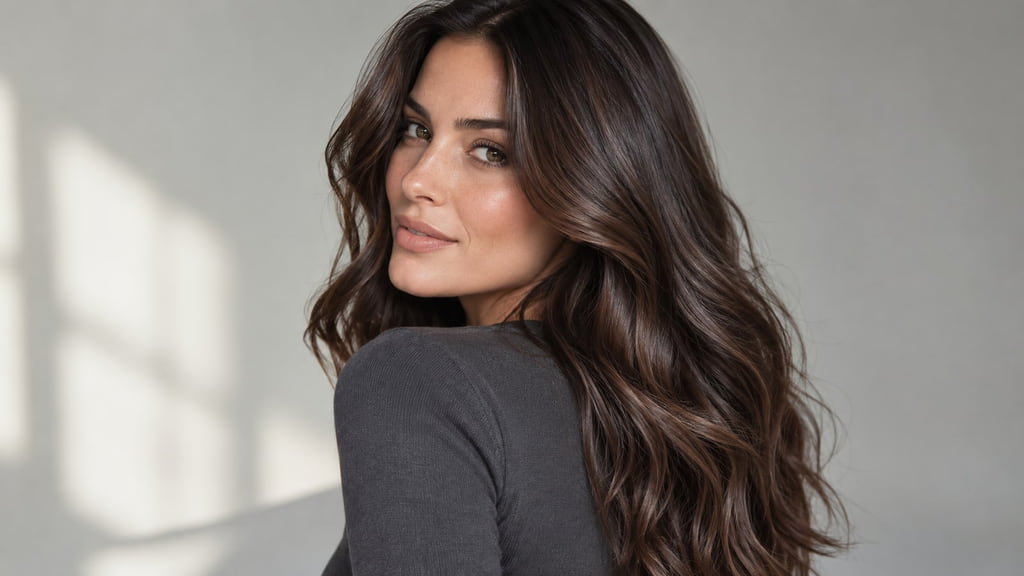
Ideas to consider for your next color appointment
There is no measured ranking of what people will wear in 2027 behind this selection. These are four useful references to bring to a color appointment: deep espresso brown, smoky pearl blonde, muted terracotta copper, and a softly shadowed root. The first three describe color directions. The fourth describes where color is placed, and it can be paired with more than one shade.
A shade name alone does not tell a colorist your starting level, the amount of lightening required, or how the color will fade. Even a familiar name such as mushroom brown can cover different looks: L’Oréal describes its mushroom brown example as a dimensional mid-toned brunette with gray, silver, or beige reflects, and distinguishes it from a more uniform ash brown. Treat names as conversation starters and ask to see the actual depth and tone you mean. If upkeep matters as much as the first-day color, use our hair color maintenance guide to plan for fading and roots.
Compare four shade directions
Compare the samples in consistent light. Depth is how light or dark a shade appears; tone is its warm, cool, or neutral reflect. A swatch helps separate those qualities from styling and clothing, but it cannot predict how a formula will look on your hair.
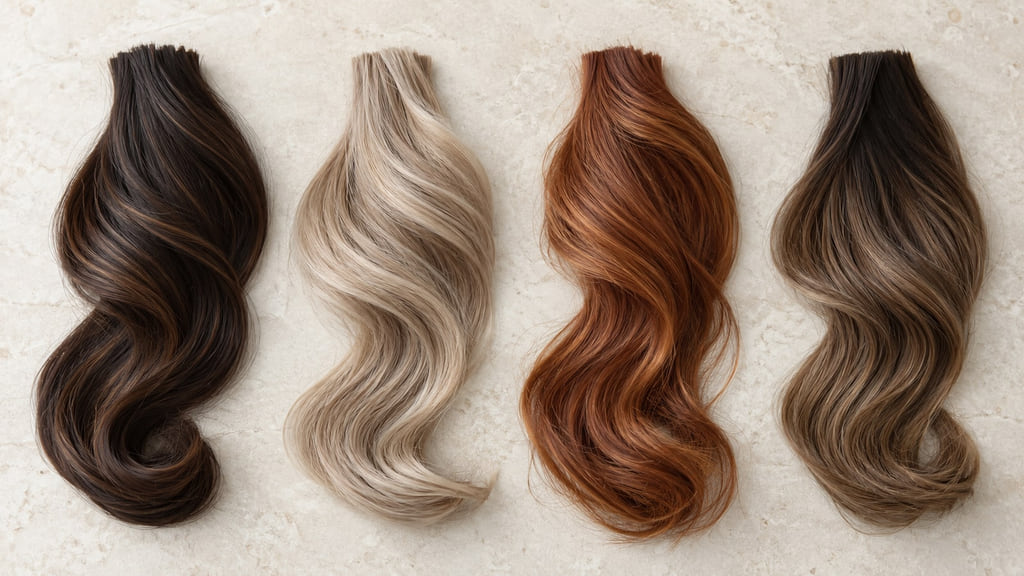
Espresso brunette with quiet dimension
Espresso is a deep brown that reads nearly solid indoors, while restrained mocha pieces can show movement in daylight. If your current hair is close to that depth, ask whether a tone adjustment or subtle dimension would meet your goal. If it is much lighter or previously bleached, moving dark can involve a different color plan and different fading. A photograph cannot reveal that history. Our what hair color suits me guide helps narrow shade families before you choose a salon reference.
Smoky pearl blonde
This reference has a muted pearl or beige-ash reflect rather than a bright, icy finish. Put it beside a warmer beige blonde at a similar depth: the comparison makes the tone difference easier to discuss than the word “smoky” alone. Your starting color and prior dye determine whether lightening is needed, and a toner cannot make dark hair blonde by itself. Ask what depth your colorist can reasonably reach and what keeping the pearl reflect would involve.
Muted terracotta copper
Terracotta combines a brownish depth with a softened red-orange reflect; an amber version looks more golden. Neither direction belongs to a single skin undertone. Compare muted terracotta with brighter copper at the same depth, then decide which amount of warmth you want to see in ordinary daylight. Copper reflects may change as the color fades, so ask how the proposed product and your routine affect refresh plans.
A soft shadow root or selective darker placement
A shadow root is a deeper area near the scalp that transitions into lighter lengths. It is a placement choice, not a fourth shade. Selected darker pieces through previously lightened hair can also change where the depth sits. Wella’s explanation of partial balayage shows how treating selected sections differs from a fuller service; it does not establish one outcome for every head of hair. Ask to see the root transition on straight as well as styled hair, because waves can hide a stronger line.
Compare upkeep rather than trend rankings
The effort depends on your starting base, previous color, gray-coverage preference, and how much visible regrowth or tone change you are comfortable with. A soft transition may make a root line less prominent, but it will not erase growth or the upkeep of lightened lengths. Use this table to identify questions for a consultation, rather than to predict an appointment interval or cost.
| Direction | Roots and placement | Tone and lightening | Ask your colorist |
|---|---|---|---|
| Espresso brunette | A base close in depth may show a quieter transition; a contrasting base remains visible. | Mocha dimension changes the reflect. Moving from lightened hair to deep brown needs an individual plan. | How will this depth fade on my current hair, and what will the roots look like? |
| Smoky pearl blonde | A shadow root can soften the transition; the blonde lengths still need attention. | The pearl tone and the amount of lightening are separate decisions. | What depth can my starting hair reach, and how would I maintain the reflect? |
| Terracotta copper | Coverage goals and the difference from your natural base shape the root plan. | Compare muted and brighter copper at one depth; ask how the reflect may fade. | Which product and refresh approach fit the warmth I want? |
| Soft shadow root | Depth is placed near the scalp or in selected sections; regrowth remains possible. | Existing light pieces can still change tone. New lightening depends on the starting hair. | Where will the transition sit, and what would I maintain between visits? |
If blending silver strands is part of your goal, ask which result the specific product can provide. Wella explains that demi-permanent products differ in the degree of coverage or blending they offer; the category name alone does not promise opacity. Record your starting point, color history, and upkeep limit in a hair color salon brief before the appointment.
Choose two references you would still like next year
Pick one reference for the depth and tone you prefer, then a second that shows an acceptable alternative or root placement. Describe what you like in each image instead of relying on a name: “deep brown with subtle lighter movement,” for example, is clearer than “espresso.” Tell your colorist how much visible regrowth and tone change you are willing to manage.
You can compare shade examples to refine the visual direction, then prepare your salon brief for a consultation. A virtual comparison can help you choose references; it cannot establish your natural base, porosity, color history, or a guaranteed salon result. Ask your colorist whether a strand test is needed to assess the proposed change.
Common questions
Are these proven top trends for 2027?
No. They are editorial ideas for comparing shade depth, tone, placement, and upkeep. They are not a measured popularity ranking or a prediction of what everyone will choose.
Will a shadow root remove all visible regrowth?
No. A softer transition can make a line less obvious, but the root still grows and the lighter lengths can change tone. Ask how the placement would look against your starting hair as it grows out.